How to Reduce Boiler Pressure Safely
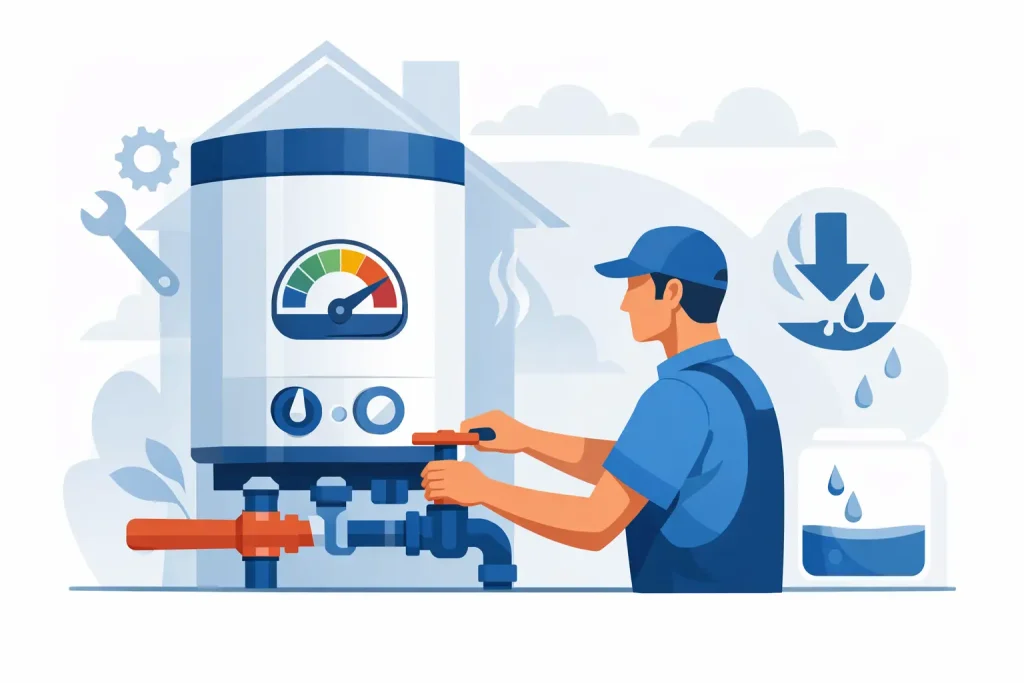
A boiler pressure gauge creeping into the red can be unsettling, especially when you are not sure whether it is a simple fix or a sign of a bigger fault. If you are wondering how to reduce boiler pressure, the first thing to know is that many pressure issues are straightforward, but they still need to be handled carefully. The goal is not just to get the needle down. It is to do it safely, without masking a fault that could lead to breakdowns or repeated call-outs.
For most sealed domestic heating systems, the normal cold pressure sits around 1 to 1.5 bar. When the heating is on, it will usually rise a little. That is expected. What is not expected is pressure staying too high, climbing towards 3 bar, or causing the pressure relief valve to discharge water outside.
What high boiler pressure actually means
High pressure usually means there is too much water in the sealed heating system, or that a component designed to control expansion is not doing its job properly. In plain terms, water expands as it heats up. Your system needs space to absorb that increase. If it cannot, the pressure rises.
Sometimes the cause is simple. The filling loop may have been left open after topping up the system. In other cases, the expansion vessel may have lost its charge, or there may be a fault with the pressure gauge itself. This is why pressure should never be treated as a number to push down and forget about. It tells you something about how the system is behaving.
How to reduce boiler pressure safely at home
If your boiler is over-pressurised but otherwise working normally, there are a few checks you can do. Start by turning the heating off and allowing the system to cool fully. It is always better to check pressure when the boiler is cold, as hot systems naturally show a higher reading.
Next, look at the pressure gauge. If it is well above the normal range, check the filling loop first. This is the flexible silver braided hose usually found beneath the boiler, with a valve at each end or a built-in filling key arrangement, depending on the make and model. If either valve is open, close it properly. A filling loop left slightly open is one of the most common reasons for pressure creeping up.
If the filling loop is shut and the pressure is still too high, you can reduce it by bleeding a radiator slightly. Place a cloth and container underneath the bleed valve, then use a radiator key to release a small amount of water. Keep an eye on the boiler gauge as you do this. You do not need to let much water out. Often a short release is enough to bring the pressure back into the right range.
Once the pressure drops to around 1 to 1.5 bar when cold, close the bleed valve securely. Then check that the radiator is not leaking and that all valves are dry. If you have bled out more water than expected, you may need to top the system back up slightly afterwards, but only if the pressure falls too low.
When reducing pressure is not the real fix
There is a difference between correcting pressure once and having a pressure problem. If the gauge repeatedly rises too high after you have adjusted it, there is likely an underlying issue. This is where a lot of homeowners get caught out. The pressure is lowered, the boiler runs again, and it looks sorted. Then a few days later the same thing happens.
A faulty expansion vessel is a common cause. If the vessel has lost its air charge or the internal diaphragm has failed, the system cannot absorb normal expansion as it heats. That leads to repeated pressure spikes. Another possibility is a filling loop valve that is passing water even when it looks closed. Less commonly, a problem with a heat exchanger can cause pressure to rise in ways that need professional diagnosis.
The trade-off is simple. A quick pressure adjustment can get you going again, but if the issue keeps returning, continuing to bleed water out is only managing the symptom. It will not protect the boiler from further strain or help you avoid a breakdown.
Signs you should stop and call an engineer
Some pressure issues are not suitable for DIY. If water is discharging through an outside copper pipe, if the boiler is locking out, or if the pressure shoots up rapidly as soon as the heating starts, it is time to get it checked properly. The same applies if you are unsure which valves belong to the filling loop or if access under the boiler is tight and awkward.
Landlords should be especially cautious. If a tenant reports repeated pressure loss or high pressure, it is worth dealing with it properly rather than leaving them to top up or bleed the system themselves. Safe, reliable heating matters, and recurring pressure issues can point to faults that need attention before they become more expensive.
Common mistakes when trying to reduce boiler pressure
The biggest mistake is opening the wrong valve. Under a boiler there can be several pipes and valves close together, and not all of them are there for pressure adjustment. Turning the wrong one can create a leak or interfere with system isolation points.
Another common issue is bleeding too much water from a radiator. If the pressure then drops too low, the boiler may stop working, and you are left correcting one problem by creating another. It is better to make a small adjustment, check the gauge, and repeat only if needed.
People also sometimes ignore what happened before the pressure rise. If the system was recently topped up, a valve may not have been fully closed. If a new part was fitted, the engineer may have refilled and tested the system hot, so the pressure may settle differently once cold. Context matters.
How to tell whether your pressure is actually too high
Not every movement on the gauge is a fault. If your boiler sits at around 1.2 bar cold and rises to just under 2 bar when hot, that is usually perfectly normal. Pressure changes with temperature. What you are looking for is excessive rise, readings near 3 bar, or pressure relief discharge.
It also helps to know whether the gauge is trustworthy. On older boilers, pressure gauges can stick or read inaccurately. If the gauge appears high but the system is showing no other symptoms, it may need checking as part of a proper service. That is one reason routine maintenance matters. Pressure readings make more sense when the rest of the boiler has been cleaned, tested and inspected thoroughly.
How to prevent boiler pressure problems returning
The best way to avoid repeat pressure issues is not repeated topping up or bleeding. It is identifying why the pressure changed in the first place. If it was simple overfilling, that is easy enough. If it is a failing expansion vessel, passing filling loop, or a problem elsewhere in the system, the lasting fix is repair.
Regular servicing helps because pressure-related issues often show up alongside other warning signs. During a thorough boiler service, an engineer can check the system condition, inspect for discharge from the relief pipe, assess component performance and spot issues before they turn into no-heat emergencies. That is particularly valuable in busy family homes where the heating and hot water need to work first time.
For homeowners and landlords across West Lothian, the sensible approach is straightforward. If you know how to reduce boiler pressure and the system settles back to normal, keep an eye on it. If the pressure keeps climbing, do not ignore it. At Boiler-Serv, we do not cut corners, and recurring pressure faults are a good example of why careful diagnosis matters more than quick guesses.
A final word on safety
Boilers are designed with safety devices for a reason, and pressure is one of the clearest signs that something may need attention. Lowering it can be simple, but the real value is understanding whether the system is behaving normally afterwards. If you are ever unsure, it is far better to ask than to keep adjusting the same problem and hope it goes away. Keeping your heating safe and dependable usually starts with taking small warning signs seriously.