Top Signs Boiler Needs Attention Soon
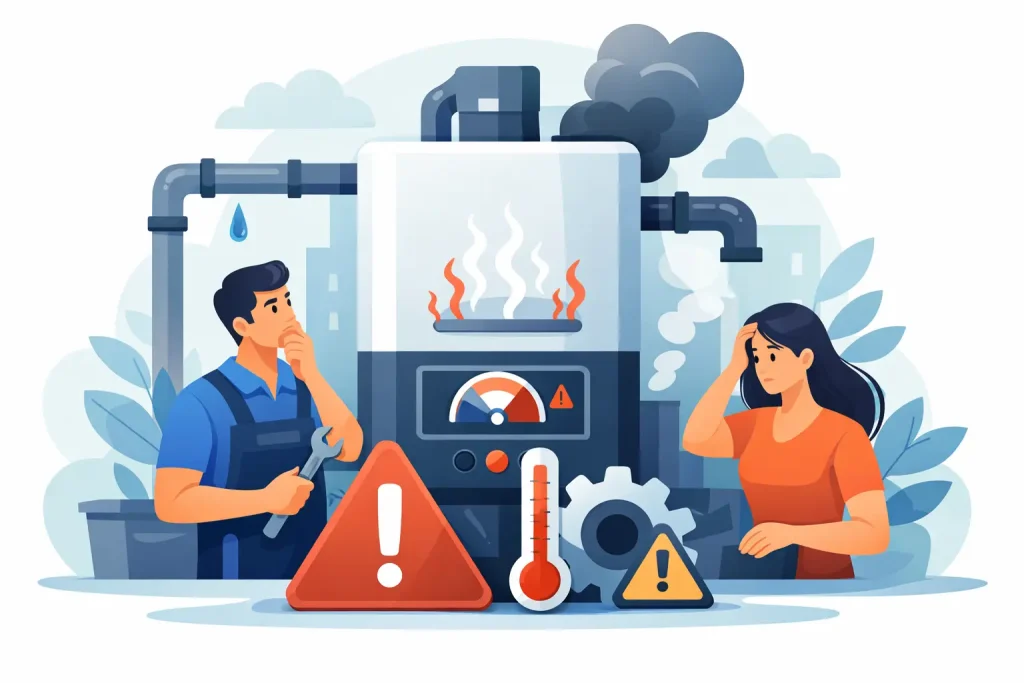
A boiler rarely fails without warning. More often, it starts dropping small hints – odd noises, patchy heating, pressure problems, or hot water that suddenly turns unreliable. Knowing the top signs boiler needs attention can help you act early, avoid a full breakdown, and keep your home safe and warm.
For many households, the first instinct is to ignore a boiler if it is still technically working. That is understandable, especially when life is busy. But a boiler that is running badly is often costing more to operate, putting extra strain on parts, and in some cases creating a safety issue that should not be left.
Top signs boiler needs attention before it breaks down
One of the clearest warning signs is unusual noise. Boilers are never completely silent, but they should not suddenly start banging, whistling, gurgling, vibrating, or making a repeated clicking sound. Different noises can point to different faults. Kettling, for example, can suggest limescale or sludge restricting water flow and causing overheating inside the heat exchanger. Gurgling may mean air in the system or circulation issues. The exact cause needs proper checking, but the key point is simple – a noisier boiler is often a boiler under stress.
Another common problem is inconsistent heating. If some radiators are hot and others stay lukewarm, or if the house takes much longer than normal to warm up, the issue may not be the boiler alone. It could involve sludge in the system, a circulation fault, trapped air, low pressure, or a thermostat issue. That is why a careful inspection matters. Quick assumptions can miss the real cause.
Hot water problems are also high on the list. If your taps run hot and cold without warning, or the hot water is taking longer to come through, the boiler may be struggling to maintain performance. In combi boilers this can point to worn components, blocked plate heat exchangers, sensor faults, or pressure-related issues. If the problem is new, it is worth getting it checked rather than waiting for it to become a no-hot-water callout.
Pressure loss and leaks should never be brushed off
Boiler pressure is one of the most obvious indicators that something is not right. If you find yourself topping up pressure repeatedly, there is usually an underlying reason. It may be a small leak somewhere on the heating system, a failing expansion vessel, a pressure relief valve issue, or another internal fault.
A one-off pressure adjustment is not always serious. Repeated pressure loss is different. It tells you the system is not holding pressure as it should, and that means attention is needed.
Visible leaks matter too, even small ones. Water around the boiler casing, pipework, or beneath radiators can lead to corrosion, damage surrounding areas, and gradually affect system performance. Some leaks are easy to spot. Others are slower and only show up as staining, damp patches, or unexplained pressure drops. Either way, leaks should be treated as repair issues, not something to watch for a few months.
If the flame, pilot or burner behaviour changes, get it checked
Modern boilers are designed with safety controls, but any change in flame behaviour should be taken seriously. On older appliances with a visible flame, it should generally burn cleanly and consistently. If it looks unstable or discoloured, that is not something to ignore.
Likewise, if the boiler keeps trying to fire up and failing, locks out regularly, or resets more often than usual, there is a fault somewhere in the ignition, combustion, sensing, or circulation process. Homeowners should not try to diagnose petrol appliance faults themselves. This is the point where a Petrol Safe registered engineer should inspect the boiler properly.
There is an important difference between inconvenience and risk. A boiler that needs resetting every now and then may seem like a manageable annoyance. In reality, repeated lockouts are the boiler telling you something is wrong.
Rising bills can be one of the top signs boiler needs attention
Not every warning sign is dramatic. Sometimes the clue is simply that your petrol bills have crept up even though your usage has stayed broadly the same. Boilers lose efficiency when internal components are dirty, worn, blocked, or not operating as they should. Heating systems also become less efficient when sludge builds up, filters are missing or blocked, or controls are not working properly.
This is where a thorough service makes a real difference. A basic once-over may confirm the boiler turns on and passes limited checks, but a more detailed service can uncover issues that affect efficiency and reliability long before they turn into a breakdown.
Older boilers deserve a bit more attention here. Age alone does not mean immediate replacement, and many older appliances can continue running well if maintained correctly. But parts do wear, seals deteriorate, and combustion performance can drift over time. If the boiler is older and your bills are rising, it is sensible to have it assessed properly rather than guessing.
Warning lights, fault codes and thermostat problems
Fault codes are useful, but they are not the full diagnosis. A display might suggest low pressure, ignition failure, overheating, or a fan problem, but the code is a starting point, not the answer on its own. Clearing the code without fixing the cause usually means the issue comes back.
Thermostat and control issues can look like boiler faults when they are not, but they still need attention. If the heating is not responding properly, rooms are overshooting temperature, or the boiler is firing at odd times, the problem could be with the programmer, room thermostat, smart controls, motorised valves, or wiring. For the customer, it all feels like the same thing – the heating is not behaving properly. A good engineer should check the wider system, not just the boiler in isolation.
Smells, staining and anything that feels unsafe
A boiler should never be ignored if there is an unusual smell, scorching marks, soot, or signs of overheating around the appliance. These are not wait-and-see symptoms. Turn the appliance off if needed and get professional advice.
It is worth saying clearly that carbon monoxide cannot be relied on to produce a smell, which is why an audible carbon monoxide alarm is so important in any home with a petrol appliance. If an alarm activates, follow the safety guidance immediately and seek urgent help.
Even when there is no obvious emergency, visual signs matter. Black marks, yellowing, corrosion, or staining around a flue or boiler casing can indicate combustion or flueing issues that should be checked by a qualified engineer.
Why early attention usually saves money
People often delay calling because they are worried a visit will lead straight to an expensive repair. Sometimes that happens. Often, though, dealing with a fault early is the cheaper option. A struggling pump, blocked condensate, dirty burner, or pressure issue caught in time is usually easier to sort than the same fault after it has stressed other components or caused a full loss of heating and hot water.
There is also the disruption factor. A boiler problem in mild weather is inconvenient. The same problem in the middle of winter, with a cold house and a family waiting on hot water, is a different matter entirely. Landlords have the added pressure of tenant welfare and compliance responsibilities, so small warning signs should never be left to drift.
For homeowners and landlords across West Lothian, the practical rule is this: if the boiler is behaving differently, sounding different, or performing worse than normal, there is usually a reason. At Boiler-Serv, the focus is on detailed checks, honest advice, and no corner-cutting, because proper servicing and fault-finding are what prevent many avoidable breakdowns.
When to book a service and when to call for a repair
If the boiler is due its annual service, running but showing minor warning signs, or simply not performing as well as it used to, book a proper service. That gives the engineer a chance to clean, test and inspect the appliance and heating system before a fault develops further.
If you have no heating, no hot water, repeated lockouts, persistent pressure loss, leaks, unusual smells, or anything that raises a safety concern, treat it as a repair issue instead. Waiting for the annual service in those cases is not the right approach.
A good boiler does not need to be perfect, but it should be safe, dependable and efficient. If yours is making you second-guess whether it will get through the next cold snap, that is usually the moment to stop hoping and get it looked at properly.