Boiler Service vs Boiler Repair Explained
A boiler often gives you very little warning before it lets you down. One day the heating is fine, the next you have no hot water, a fault code on the display, or radiators that never quite get warm. That is where the question of boiler service vs boiler repair matters. They are not the same job, they are not needed for the same reason, and confusing one for the other can cost you time, money, and comfort.
For homeowners and landlords across West Lothian, the difference is simple at first glance. A service is planned maintenance. A repair is fault-finding and fixing a problem. But in practice, there is more to it than that. Knowing when to book each one helps you keep the boiler safe, reduce the chance of breakdowns, and avoid paying for work you do not actually need.
What is the difference between boiler service vs boiler repair?
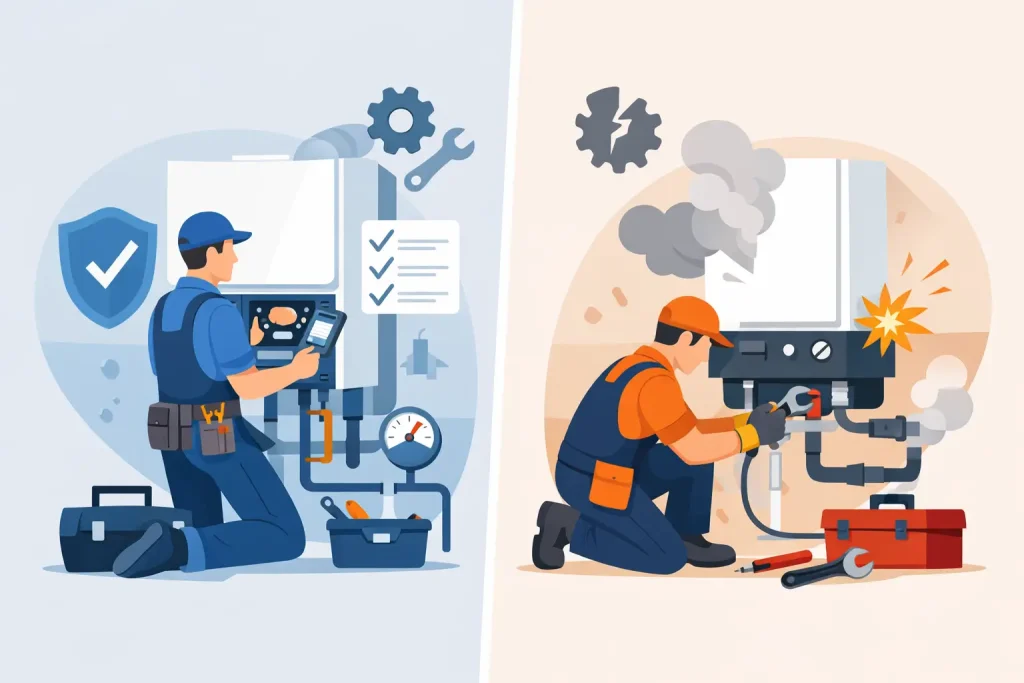
A boiler service is a preventative visit. The aim is to inspect the appliance, clean key internal components where required, carry out safety checks, test combustion performance, and make sure the boiler is operating as it should. It is about catching wear, dirt build-up, and early warning signs before they turn into failure.
A boiler repair is reactive. Something has already gone wrong, or the boiler is clearly not working properly. The engineer’s job is to diagnose the fault, identify the failed or worn part, and restore safe operation.
That difference matters because a service is not a repair appointment in disguise. If a boiler has already broken down, annual servicing alone will not magically put it right. Just as importantly, a repair is not a substitute for proper yearly maintenance. Fixing one failed component does not mean the rest of the appliance has been cleaned, tested, and checked in the way it should be.
What happens during a boiler service?
A proper boiler service should go well beyond a quick look at the casing and a tick in a box. If the visit is rushed, problems can be missed. That is often where householders feel let down, especially if they have paid for a “service” that was little more than a basic visual check.
A thorough service typically includes inspection of the boiler and flue, internal cleaning where needed, checks on seals and key components, petrol pressure and combustion testing, and safety checks to confirm the appliance is burning correctly and ventilating as it should. The engineer should also look for signs of wear, corrosion, leaks, or poor system performance.
On modern boilers, that can include checking the condensate arrangement, magnetic filter condition if one is fitted, and whether the system is showing signs of sludge or circulation issues. On older boilers, the service may reveal parts that are beginning to fail through age rather than sudden damage.
The point of servicing is not simply to say the boiler switched on. It is to assess how well it is running, how safely it is operating, and whether any developing issues need attention before they become bigger ones.
What happens during a boiler repair?
A repair starts with a fault. That fault might be obvious, such as no heating, no hot water, or the boiler refusing to fire. It can also be less dramatic but still serious, such as banging noises, pressure loss, leaking, poor flame performance, or repeated lockouts.
The engineer has to diagnose the cause before any fix can be recommended. In some cases, the issue is straightforward, like a faulty ignition lead, a seized pump, or a failed pressure sensor. In others, there can be several possible causes, especially if the boiler has not been maintained well or the wider heating system is dirty.
Repairs can vary in cost and complexity. Replacing a single part is very different from tracing an intermittent fault or dealing with system contamination that has damaged components over time. That is why honest communication matters. A good engineer should explain what has failed, why it has happened, and whether repair is sensible compared with replacement.
When you need a service, and when you need a repair
If your boiler is working normally, an annual service is usually the right step. It helps maintain safety, supports efficiency, and gives you a chance to spot issues early. Many manufacturers also expect regular servicing to keep warranties valid.
If the boiler is not working properly, you are likely dealing with a repair. Signs include strange noises, error codes, no heat, no hot water, low pressure that keeps returning, visible leaks, or radiators staying cold despite the thermostat calling for heat.
There are also grey areas. Sometimes a customer books a service because the boiler is “mostly fine” but has one odd symptom, such as taking longer to fire up or needing pressure topped up too often. That may still turn out to be a repair issue. Likewise, a service can uncover a fault that was not obvious yet, such as a worn fan, poor combustion readings, or early signs of a heat exchanger problem.
That is why clear diagnosis matters more than labels. The right engineer will tell you whether the job is routine maintenance, a fault repair, or a bit of both.
Can a boiler service prevent boiler repairs?
Often, yes, but not always.
Regular servicing can reduce the chance of breakdown by picking up dirt, wear, blocked components, failing seals, or poor combustion before they become serious. It can also highlight wider system issues, such as sludge or circulation problems, that put extra strain on the boiler.
What servicing cannot do is prevent every fault. Electronics can fail without warning. Older parts can give up suddenly. External issues such as frozen condensate pipes, poor water quality, or system pressure problems can still cause breakdowns.
So the honest answer is that servicing lowers risk rather than eliminating it. Think of it as sensible maintenance, not a guarantee that nothing will ever go wrong. It is still one of the best ways to avoid avoidable repair bills.
Why the cheapest option is not always the best one
This is where many people get caught out. A low-cost boiler service may sound attractive, but if very little is actually done, it offers limited value. A rushed visit might miss early warning signs, leave internal dirt untouched, and give you false confidence that everything is fine.
The same applies to repairs. A quick fix that ignores the underlying cause can lead to repeat call-outs. For example, replacing a failed part without addressing sludge in the system may simply set up the next failure.
That is why a thorough, no-shortcuts approach matters. You want the boiler properly checked, clearly explained, and safely worked on. For landlords, that also means making sure legal and safety responsibilities are taken seriously. For homeowners, it means knowing your family’s heating and hot water are not being left to chance.
Boiler service vs boiler repair for landlords
Landlords have an extra layer of responsibility. A service helps maintain the boiler and may reduce the risk of tenant complaints, winter breakdowns, and avoidable wear. A repair becomes necessary when there is a genuine fault affecting safety or function.
It is worth noting that a service and a landlord petrol safety check are not the same thing, even though they may happen at the same visit. A safety certificate confirms certain legal checks have been completed. A full service is maintenance work. Responsible landlords usually benefit from understanding that distinction rather than assuming one automatically covers the other.
In rental property, prevention matters even more. A neglected boiler does not just risk inconvenience. It can lead to emergency call-outs, unhappy tenants, and higher costs at the worst possible time.
How to decide what to book
If your boiler is due its annual maintenance and is running normally, book a service. If it is showing fault codes, leaking, losing pressure, making unusual noises, or failing to heat your home or water properly, book a repair.
If you are unsure, describe the symptoms clearly when you call. That gives the engineer the best chance to assess what is likely needed and to explain what is included before the visit. A good local heating engineer will be straightforward about the difference.
For many households, the best approach is not choosing one or the other. It is staying on top of annual servicing and dealing with faults quickly when they appear. That is the practical balance between safety, cost control, and reliability.
At Boiler-Serv, that is exactly how we approach it – careful servicing to reduce risk, honest repair advice when faults do happen, and no cutting corners in either case.
If your boiler is quiet, efficient, and doing its job, that is the time to keep it that way. Waiting until it stops is usually the most expensive moment to start paying attention.