Why Is Hot Water Not Working at Home?
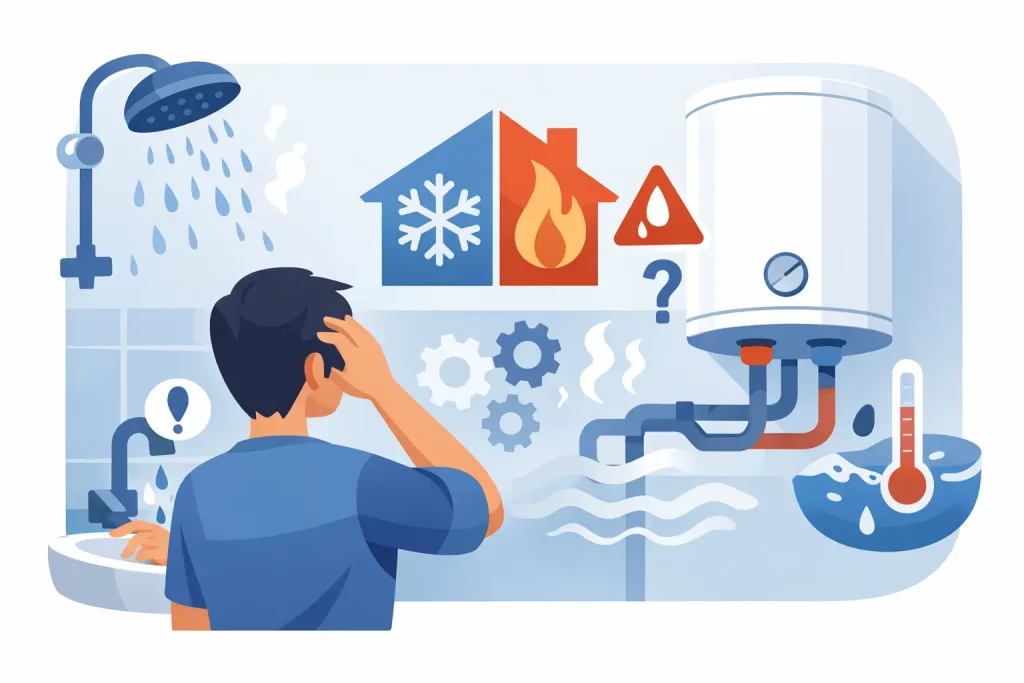
You usually notice it at the worst possible moment – first thing in the morning, halfway through washing up, or just as the children need a bath. If you are asking why is hot water not working, the answer could be something simple, or it could point to a fault that needs proper attention. The key is knowing what you can safely check yourself and where it makes sense to stop and call a qualified engineer.
Hot water problems are not all the same. In some homes, there is no hot water anywhere. In others, the kitchen tap runs hot but the shower does not. Sometimes the water goes warm for a minute, then turns cold again. Those details matter, because they often tell you whether the issue is with the boiler, the cylinder, the controls, water pressure, or a single outlet.
Why is hot water not working in some homes but not others?
The first thing to understand is that the cause depends on the type of system you have. A combi boiler heats water on demand, so if the hot water stops, the fault is often linked to the boiler itself, incoming mains pressure, or an internal component such as a diverter valve or plate heat exchanger. A system boiler or regular boiler with a hot water cylinder has more parts involved, including motorised valves, programmers, thermostats and the cylinder itself.
That is why two houses on the same street can have completely different hot water faults. One property may have a simple settings issue. Another may have a boiler lockout or a failed part. Good diagnosis always starts with the system layout, not guesswork.
Start with the simple checks
Before assuming the worst, there are a few practical things worth looking at. If your boiler has power, check whether the display is showing an error code. Many modern boilers will flag a fault clearly, although the code itself still needs to be interpreted properly.
Next, look at your programmer or thermostat. Has the hot water been turned off accidentally? This sounds obvious, but it happens more often than people think, especially after a power cut, clock change or someone adjusting the controls without realising. If you have a separate hot water schedule, make sure it is actually set to come on.
On a combi boiler, check the system pressure gauge if your model has one. Low pressure can affect operation, and many boilers will stop working properly if the pressure drops too far. That said, topping pressure up repeatedly is not a fix. If it keeps falling, there is likely an underlying issue that should be investigated.
It is also worth checking whether this is truly a whole-house hot water problem. Run the hot tap in the kitchen, bathroom and any ensuite. If one outlet is affected and the others are fine, the issue may be local to that tap, shower cartridge or pipework rather than the boiler.
Common reasons hot water stops working
A boiler in lockout is one of the most common causes. This happens when the appliance detects a fault and shuts itself down as a safety measure. Depending on the model, this could be caused by ignition issues, poor circulation, overheating, low pressure or component failure. Some lockouts can be reset once, following the manufacturer instructions. If it locks out again, it needs proper diagnosis rather than repeated resetting.
Another common issue is low boiler pressure. If the pressure has dropped below the recommended level, the boiler may not fire correctly. You may be able to repressurise it if you know how and your manufacturer allows it, but pressure loss should not be ignored. A sealed system does not just lose pressure for no reason.
On combi boilers, a faulty diverter valve is a frequent culprit. This valve directs heat either to your radiators or your hot water. When it sticks or fails, you may end up with heating but no hot water, or hot water that runs lukewarm. These faults often need strip-down work and part replacement.
If you have a hot water cylinder, the problem may sit outside the boiler itself. A failed cylinder thermostat, stuck motorised valve or timer fault can stop the cylinder heating properly. In electric immersion setups, the immersion heater may have failed, leaving you with no stored hot water even if the rest of the system appears normal.
Limescale and debris can also reduce hot water performance, particularly in areas with harder water or in older systems where maintenance has been neglected. A blocked plate heat exchanger, scaled components or dirty filters can all affect how well the system transfers heat.
When the problem is not the boiler
Not every hot water complaint points to a major boiler repair. Mixer showers can fail internally and cause temperature problems at that one outlet. Tap cartridges can become stiff or blocked. Thermostatic shower valves can drift out of calibration or stick. If the boiler fires and other taps are hot, replacing a boiler part may not be the answer at all.
There are also occasions where the incoming mains flow is the issue. A combi boiler can only produce hot water based on the water passing through it. If the incoming flow rate is poor, the water may feel weak, inconsistent or cooler than expected. People often describe this as no hot water when the real issue is insufficient flow for the appliance to perform properly.
That is one reason proper fault-finding matters. Swapping parts without proving the fault first wastes time and money.
Why is hot water not working after a power cut or boiler reset?
This can happen because controls do not always come back on exactly as expected. The programmer may reset, the boiler may remain in fault mode, or a zone valve may fail to reopen when power returns. In some cases, a marginal component was already failing and the interruption simply made the problem more obvious.
If the issue starts straight after a power cut, check the clock, timer settings and any visible fault code. If the boiler is powered but not responding as normal, it is sensible to have it checked rather than forcing repeated resets.
What you should not do
It is reasonable to check settings, system pressure and obvious signs of a fault. It is not reasonable to start removing the boiler casing, trying to free internal parts, or attempting petrol-related repairs yourself. Boilers are safety-critical appliances. Incorrect work can create risks with petrol, combustion, overheating and leaks.
The same applies if you smell petrol, notice scorching, see water leaking through the appliance casing, or hear alarming noises that were not there before. Those situations need prompt professional attention.
For landlords, there is an added compliance issue. Hot water and heating faults affect habitability, and any petrol appliance work must be carried out by a properly qualified Petrol Safe engineer. Clear records and safe repairs matter just as much as getting the heat back on.
When to call a Petrol Safe engineer
If you have checked the controls, confirmed there is no simple issue with the tap or shower, and the boiler is showing a fault, losing pressure, locking out or failing to produce consistent hot water, it is time to book a professional inspection. A thorough engineer will not just reset the appliance and leave. They should identify why the problem happened in the first place, carry out the right safety checks, and explain clearly what is needed.
That is especially important if the hot water has been unreliable for a while. Intermittent faults often point to components beginning to fail, system contamination, or servicing that has been too basic to catch developing problems. At Boiler-Serv, that is exactly why a detailed approach matters. We do not cut corners, and that applies just as much to fault diagnosis as it does to annual servicing.
Preventing the next hot water failure
You cannot prevent every breakdown, but regular servicing gives you a much better chance of catching issues early. A proper service should go beyond a quick visual check. Internal cleaning, combustion analysis, pressure checks, leak inspection and system condition checks all help spot wear before it leaves you without hot water.
It also helps to pay attention to smaller warning signs. Water taking longer to heat, temperature fluctuations, pressure dropping, unusual noises and repeated resets are all worth acting on early. Waiting until the system fails completely usually means more inconvenience and sometimes a more involved repair.
If your hot water has stopped working, the main thing is not to panic and not to guess. A few safe checks can narrow it down, but reliable heating and hot water depend on proper diagnosis, careful workmanship and no shortcuts. Getting it sorted properly is not just about comfort – it is about keeping your home safe and running as it should.