Boiler Service Checklist Example
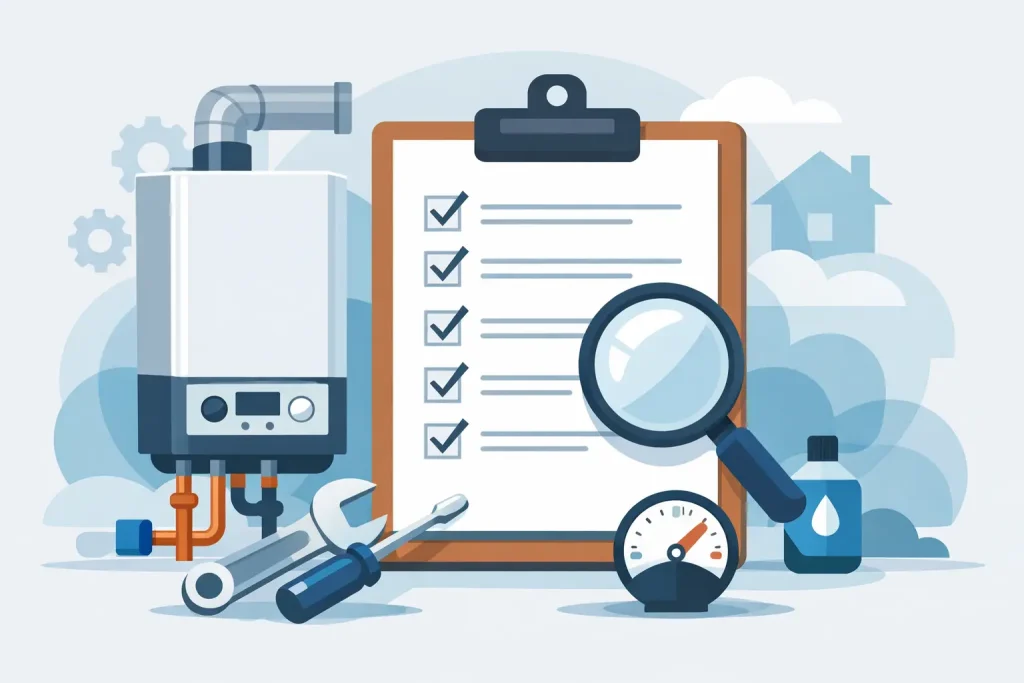
When someone asks for a boiler service checklist example, they are usually trying to answer a simple question – what should an engineer actually be doing while they are in the house? That matters, because there is a big difference between a quick once-over and a proper service that checks safety, performance and the condition of the wider heating system.
For most homeowners and landlords, the boiler only gets attention when it stops working. The better approach is to know what a thorough annual service includes before there is a problem. If you know the checkpoints, it is much easier to spot whether you are getting real value or just a rushed visit.
A boiler service checklist example in plain English
A proper gas boiler service should start before any tools come out. The engineer should ask whether you have noticed faults, pressure drops, unusual noises, radiator cold spots or problems with hot water. Small details from the customer often point to issues that would not show up on a basic visual inspection.
From there, the first stage is usually a visual and safety assessment. That means checking the boiler location, surrounding pipework, casing condition, flue route and ventilation where relevant. The engineer should be looking for signs of corrosion, water leaks, scorching, unstable pipe supports or anything else that suggests wear, poor previous work or developing faults.
The appliance should then be tested in operation. This helps confirm whether it is firing correctly and whether controls are responding as they should. Depending on the boiler and system setup, this can include checking ignition, burner operation, pump performance, pressure levels and temperature rise across the system.
That is the broad outline. A more useful checklist goes further and breaks the job into the specific items that make a service genuinely worthwhile.
What should be on a boiler service checklist example?
The combustion side is one of the most important parts. A proper service should include flue gas analysis to check that the boiler is burning gas correctly and operating within safe limits. If the readings are off, that can point to poor combustion, blockage issues, component wear or the need for adjustment. This is not the sort of thing that should be guessed at.
The flue itself also needs attention. The engineer should inspect that it is secure, correctly installed, not damaged and showing no signs of leakage. On condensing boilers, the condensate arrangement should be checked too, especially where freezing or poor drainage could cause future breakdowns.
Inside the boiler, several components should be inspected and, where the manufacturer allows, cleaned. That often includes the burner, heat exchanger, ignition electrodes and condensate trap. This is where service quality can vary a lot. Some visits focus only on external checks, while a more detailed service includes opening the case, checking internal condition and removing build-up that can reduce efficiency or lead to faults over time.
Seals and gaskets may also need inspection. They are not automatically replaced every year, but they should be checked for condition and suitability when the boiler is opened. If there is any sign of damage or deterioration, that needs to be dealt with properly rather than ignored to save time.
Gas tightness and working gas pressure should also be part of the process. These checks help confirm the appliance is getting the correct supply and that there are no leaks on the installation. If pressure is wrong, the boiler may still run, but not as efficiently or as safely as it should.
Safety devices are another key part of any checklist. The engineer should confirm that the boiler’s built-in safety controls are intact and functioning as intended. On modern boilers, faults are often prevented or limited by these controls, so checking them is not optional.
Beyond the boiler itself, the heating system deserves attention too. A proper service should include checking system pressure, expansion vessel charge where accessible and relevant, radiator performance, magnetic filter condition if fitted, and signs of sludge or circulation issues. A boiler can be in reasonable condition and still perform poorly if the rest of the system is dirty or unbalanced.
Controls matter as well. The room thermostat, programmer and any smart controls should be checked to make sure they are calling for heat correctly. Many heating complaints come down to control issues rather than the boiler itself, so this part should not be skipped.
The difference between a basic service and a thorough one
This is where homeowners often get caught out. One engineer may describe a service as a quick visual check and combustion reading. Another may include casing removal, internal cleaning, condensate trap cleaning, full flue inspection, system checks and clear advice on wear or developing faults.
Neither approach should be misrepresented, but they are not the same service. If the price seems unusually low, it is fair to ask what is actually included. Sometimes a basic annual check is enough for a newer boiler with excellent history and no signs of trouble. In other cases, especially on older appliances or heavily used family homes, a more detailed service is the sensible option.
We don’t cut corners is not just a slogan in this trade. It should mean the engineer is prepared to spend the time needed to inspect, clean and test properly, rather than aiming to get in and out as fast as possible.
Example checklist for a domestic gas boiler service
A realistic boiler service checklist example for a home in West Lothian would usually cover the following areas:
- Ask about faults, noises, pressure loss and heating or hot water concerns
- Inspect boiler casing, pipework, flue and installation condition
- Check for gas tightness and confirm working gas pressure where required
- Fire the boiler and assess general operation
- Carry out flue gas analysis and compare readings with expected values
- Inspect internal components after opening the boiler where service instructions allow
- Clean the burner, heat exchanger, electrodes and condensate trap as needed
- Check seals, electrical connections and visible signs of overheating or water ingress
- Test safety devices and confirm controls operate correctly
- Check system pressure, expansion vessel condition where relevant and general circulation performance
- Inspect magnetic filter and look for signs of sludge or contamination in the system
- Reassemble, retest and leave service records or advice on any remedial work
Not every boiler allows exactly the same access, and manufacturers set different service procedures. That is why a good engineer follows the appliance instructions rather than applying one identical routine to every model.
Why landlords and homeowners should care about the detail
For landlords, paperwork matters, but so does the condition behind it. A certificate is important, but it does not replace proper servicing. If a tenant reports low heat, noises or repeated pressure loss, a more thorough inspection can prevent repeat call-outs and avoid complaints later.
For homeowners, the benefit is usually peace of mind and fewer surprises. A service done properly gives you a clearer picture of whether the boiler is in good order, beginning to show wear, or likely to need repair soon. That can help you plan ahead instead of facing a breakdown on the coldest week of the year.
There is also the efficiency side. Servicing will not turn an old boiler into a brand-new one, and anyone suggesting huge savings from servicing alone is overselling it. But cleaning key components, checking combustion and spotting circulation issues can help the system run as it should, which is better for reliability and often better for fuel use as well.
Questions worth asking before you book
If you want to know whether you are booking a proper service, ask what is included. Will the engineer remove the case if required? Do they clean internal parts where appropriate? Will they carry out combustion analysis, flue checks and system checks, or only inspect the appliance externally?
It is also sensible to ask whether the visit includes advice on the wider heating system. Sludge, poor balancing, failed filters and control problems are common in domestic properties, and they affect boiler performance even when the boiler itself is not at fault.
A local, engineer-led business often has an advantage here because the same person is usually accountable from start to finish. That means clearer communication, better continuity and fewer vague answers if something does need attention afterwards. For many households across West Lothian, that reassurance matters just as much as the service itself.
The best checklist is not the longest one on paper. It is the one that reflects a careful, methodical service carried out by someone who values safety, explains what they have found and leaves your heating system in a better, more dependable state than when they arrived.