
Smart Thermostat vs Manual Controls
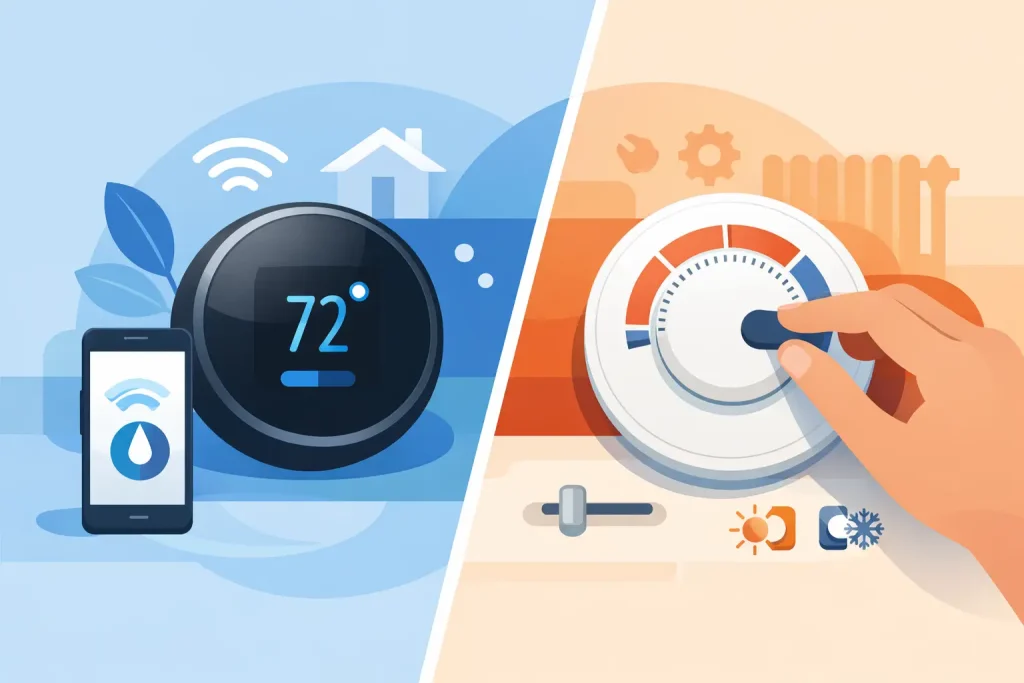
You notice it most on a cold West Lothian morning. The heating is either late coming on, the house feels warmer than it needs to be, or someone has turned the dial up too far and forgotten about it. That is usually when the question of smart thermostat vs manual controls stops being theoretical and becomes a practical decision about comfort, running costs and how well your heating system actually works day to day.
For some homes, manual controls are still perfectly adequate. For others, a smart thermostat is a worthwhile upgrade that gives better control and can help reduce wasted heat. The right answer depends on the property, the boiler, the people living there and how the heating is used in real life.
Smart thermostat vs manual controls: what is the actual difference?
A manual control setup is the traditional approach. You might have a simple wall thermostat, thermostatic radiator valves on some radiators, and a programmer or timer near the boiler or in an airing cupboard. You physically set temperatures and time periods yourself, and unless someone changes them, they stay the same.
A smart thermostat does the same basic job, but with more flexibility. It allows you to adjust heating from a phone, set more detailed schedules, and in many cases learn usage patterns or show energy reports. Some systems can also control hot water, create different heating periods for different days, and integrate with other smart devices.
The key point is this: both types can heat your home properly when installed and set up correctly. A smart thermostat is not automatically better just because it is newer. Good heating control comes from correct setup, sensible use and making sure the rest of the system is in good condition.
When manual controls still make good sense
Manual controls are often better than people assume. If your routine is consistent, your home is occupied at similar times each day, and you are happy adjusting settings yourself, a standard programmer and room thermostat can work well.
They are also straightforward. There is less to learn, fewer app issues, and usually less to go wrong from a user point of view. For landlords, simple controls can sometimes be the more practical option in rental properties where ease of use matters and tenants may not want another app to manage.
Cost is another factor. Manual controls are usually cheaper to install and replace. If your current controls are reliable and the system is performing well, replacing everything with a smart setup may not give dramatic savings. That is especially true in smaller homes or flats where heating demand is lower and schedules are already fairly predictable.
There is also a reliability argument people often value. A manual thermostat does not depend on Wi-Fi, phone apps or account logins. If someone wants a heating system that is simple and familiar, manual controls still have a place.
Where smart thermostats tend to offer better value
A smart thermostat comes into its own when household routines change frequently. If people leave at different times, come home unexpectedly, work from home some days but not others, or regularly forget to turn heating down, smart control can be genuinely useful.
Being able to adjust the heating remotely is one of the biggest advantages. If you are out longer than expected, you can stop the system heating an empty home. If you are on the way back and want the house warm for arrival, you can switch it on without leaving it running all day.
More detailed scheduling can also help. Many manual programmers are limited and awkward to change. Smart systems usually make it easier to set different times for weekdays and weekends, adjust short heating periods, and fine-tune comfort without constantly going back to the controls on the wall.
For households trying to reduce waste rather than simply cut heat altogether, that convenience matters. People are more likely to use heating efficiently if the controls are easy to understand and easy to change.
Smart thermostat vs manual controls for running costs
This is where expectations need to be realistic. A smart thermostat can help reduce energy use, but it does not perform miracles. If a home is poorly insulated, the boiler is inefficient, or the heating system is sludged up and not working properly, controls alone will not fix that.
Savings usually come from avoiding unnecessary heating. If your manual controls already match your routine well and you use them carefully, the difference may be modest. If your current setup regularly heats the house when nobody is in, or the timer is left on the same setting all year, smart controls can make a more noticeable difference.
The biggest gains tend to come from behaviour. Better visibility and easier control often lead to better habits. That is useful, but it is not the same as saying the device itself creates savings regardless of how the system is used.
A well-serviced boiler and clean heating system are part of this conversation too. Controls can only tell the system what to do. They cannot compensate for poor combustion performance, circulation issues or radiator imbalance.
Compatibility matters more than most people expect
Before fitting any smart control, it is worth checking how your existing heating system is set up. Not every boiler and control arrangement is identical, and compatibility should never be guessed.
Some boilers work very happily with basic on-off smart thermostats. Others may benefit more from controls that communicate better with the boiler and allow more precise modulation. In simple terms, modulation helps the boiler adjust output more efficiently instead of repeatedly firing at full rate and stopping.
There is also the wider system to consider. Zone valves, hot water cylinders, older wiring centres and existing programmers can all affect what is suitable. In some properties, installation is quick and straightforward. In others, a proper upgrade means more than just swapping the wall thermostat.
That is one reason honest advice matters. A good installer should explain what will work with your setup, what features you will actually use, and whether the upgrade offers practical value rather than just extra technology.
Ease of use is not a small detail
The best heating controls are the ones people will actually use properly. That may sound obvious, but it is where many decisions go wrong.
Some homeowners love app control and want detailed schedules, temperature graphs and remote access. Others just want the heating to come on at the right time and not be fiddly. If a smart thermostat feels overcomplicated, it may end up being left on a basic setting anyway, which removes much of the benefit.
Manual controls can be better for elderly relatives, less confident users or anyone who prefers clear physical settings. On the other hand, many modern smart thermostats are very user-friendly once installed correctly and explained properly.
The important thing is not choosing the most advanced option. It is choosing the option that suits the household.
Safety, servicing and the bigger heating picture
Controls affect comfort and efficiency, but they are not a substitute for proper maintenance. Whether you have a smart thermostat or manual controls, the boiler still needs regular servicing, safety checks and careful inspection.
If heating performance is poor, rooms are taking too long to warm up, or the boiler is cycling oddly, that may point to issues elsewhere in the system. Dirty components, incorrect pressure, blocked filters, pump problems or poor circulation all affect how the heating behaves.
That is why no-shortcuts heating advice should look at the full setup. At Boiler-Serv, smart thermostat installation only makes sense when it is matched to the actual condition of the boiler and system, rather than treated as a quick fix for every heating complaint.
Which is right for your home?
If you want low upfront cost, straightforward operation and your heating routine rarely changes, manual controls may be the sensible choice. They are familiar, dependable and often entirely adequate when set up properly.
If your household schedule changes often, you want remote access, or you know your current settings lead to wasted heating, a smart thermostat is usually the stronger option. It gives more flexibility and often better day-to-day control.
For landlords, the decision can depend on the property and tenancy. In some homes, simple controls reduce confusion. In others, a smart thermostat adds value and helps manage heating more effectively between lets.
For homeowners planning to stay put, the decision is often about convenience as much as savings. If better control means the home is more comfortable and the system is used more sensibly, that has value even if the financial saving is gradual rather than dramatic.
The best choice is rarely about trends. It is about how your heating is used, whether the system is suitable, and whether the controls make life easier without creating unnecessary complexity. If you are weighing up smart thermostat vs manual controls, start with what your home actually needs, not what sounds newest. Good heating should feel reliable, understandable and properly set up from the start.