Boiler Breakdown Warning Signs to Act On
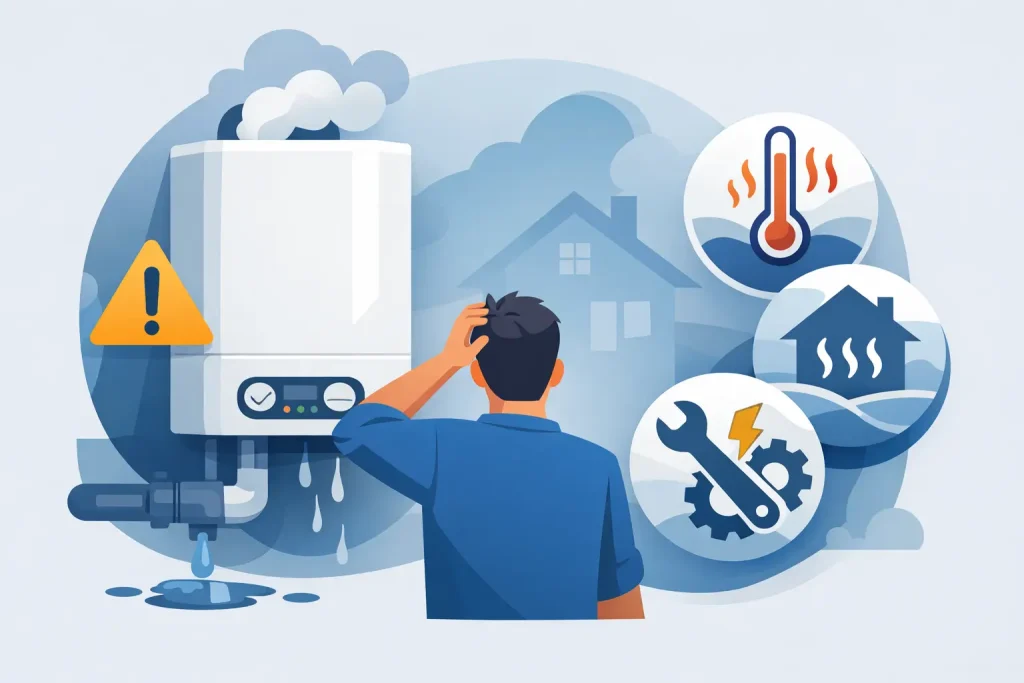
A boiler rarely chooses a convenient time to fail. It is usually on a cold morning, before the school run, or when a tenant reports there is no hot water. Knowing the boiler breakdown warning signs can help you arrange the right repair before a small fault leaves your home cold – or creates a safety concern.
Some issues need an engineer promptly, while others may simply point to low system pressure or a setting that needs adjusted. The key is not to ignore a change in how your boiler, radiators or hot water are performing. Gas appliances should always be treated with care. Do not remove a boiler case or attempt repairs yourself: a Gas Safe registered engineer should diagnose faults involving the boiler or gas supply.
1. Your boiler is losing pressure repeatedly
Most sealed heating systems operate at roughly 1 to 1.5 bar when cold, although the correct range varies by manufacturer and installation. A one-off pressure drop can occasionally happen, particularly after radiators have been bled. But if you keep topping the system up, something is wrong.
The cause may be a leak on pipework, a radiator valve, the pressure relief pipe, or inside the boiler itself. It can also be linked to an expansion vessel fault. Repressurising repeatedly may get the heating running temporarily, but it does not fix the reason pressure is being lost. Continued topping up can introduce fresh water and oxygen into the system, increasing the risk of internal corrosion over time.
Check for visible drips around radiators and pipe joints, and look outside for water discharging from the pressure relief pipe. Then arrange an inspection rather than treating the filling loop as a permanent solution.
2. Unusual noises from the boiler or heating system
A healthy boiler will make some normal operating sounds: a gentle fan noise, ignition, and water moving through the system. New or increasingly loud noises deserve attention.
Banging, rumbling or whistling can indicate kettling. This happens when restricted water flow causes water to overheat in the heat exchanger. Sludge, limescale, a blocked filter, a failing pump or poor circulation may be involved. Left unchecked, kettling can put extra strain on expensive boiler components.
Gurgling radiators often suggest trapped air, while a persistent clicking noise may relate to ignition or electrical controls. The sound alone does not provide a full diagnosis, which is why a proper check matters. A careful engineer will look beyond the symptom, checking the boiler and the wider heating system rather than replacing parts by guesswork.
3. Hot water or heating is unreliable
If your shower turns cold halfway through, radiators take an age to heat up, or the boiler fires up and cuts out repeatedly, do not assume it is simply having an off day. Intermittent performance is one of the most common boiler breakdown warning signs, and it can become a complete failure without much notice.
The underlying issue depends on the system. In a combi boiler, a faulty diverter valve, temperature sensor, pump or plate heat exchanger can affect hot water or heating performance. On a system with a hot water cylinder, controls, valves and the cylinder itself may also need checked.
Make a note of what is affected. Is it heating only, hot water only, or both? Does the problem happen at particular times or when more than one tap is used? These details help an engineer find the fault efficiently and avoid unnecessary disruption.
4. Radiators have cold patches or rooms heat unevenly
A radiator that is cold at the top may need bleeding. A radiator that is cold at the bottom, however, often points to sludge collecting inside it. Brown or black water, stubborn cold spots, and some rooms heating far better than others are signs that the system may need more than a quick bleed.
Central heating systems gradually collect magnetite, a dark metallic sludge created by internal corrosion. This can reduce circulation, make the boiler work harder and contribute to failures in pumps, valves and heat exchangers. Older systems are particularly prone to it, but any system can suffer if water quality has been neglected.
The right remedy depends on the condition of the system. It may involve cleaning, balancing radiators, fitting or servicing a magnetic filter, and adding inhibitor afterwards. A thorough assessment is preferable to pouring chemicals into a system without checking why it has become contaminated.
5. The boiler displays a fault code or keeps resetting
Modern boilers are designed to flag certain problems through a fault code. Keep the code visible if possible, note the make and model of the boiler, and check the manufacturer instructions for basic user actions. In some cases, such as low pressure, the handbook may explain a safe step you can take.
Do not keep pressing reset if the code returns. Repeated resets can mask an ongoing fault and will not resolve a problem with ignition, circulation, condensate drainage, sensors or the gas-related safety controls. A boiler that locks out more than once needs a proper diagnosis.
It is also worth considering when the fault occurs. A condensate pipe may freeze during very cold weather, for example, while a pressure or circulation issue may show itself whenever the heating is working hard. Context helps, but it never replaces safe testing.
6. Water leaks, stains or corrosion are appearing
Any water around a boiler should be taken seriously. A small drip can damage electrical components, lower system pressure and lead to more costly repairs. Look for damp patches beneath the boiler, staining on the casing or nearby wall, corrosion on visible pipework, and water around valves or radiators.
Do not confuse boiler condensate with a leak. Condensing boilers produce water as part of normal operation, which drains through a dedicated condensate pipe. Water coming from the boiler casing, safety discharge pipe or heating connections is different and should be checked.
If a leak is active, switch the boiler off if it is safe to do so, protect nearby belongings and contact an engineer. Avoid touching internal components or trying to tighten fittings on the boiler.
7. Your energy bills are climbing without a clear reason
Higher fuel use can reflect colder weather, increased time at home or changes to energy prices. But if your usage rises noticeably while your routine has stayed much the same, your heating system may be losing efficiency.
A boiler that is short-cycling, poorly controlled or struggling with restricted circulation can use more gas than necessary. So can a system with incorrect settings, an inaccurate thermostat or radiators that are not balanced. An annual service gives an engineer the chance to check combustion, clean key components where required, inspect the condensate arrangement and confirm the boiler is operating safely and efficiently.
Smart heating controls can help some households manage energy use, but they are not a cure for a mechanical fault. It makes sense to establish that the boiler and system are working correctly before expecting controls alone to reduce bills.
8. You smell gas, see soot or notice a yellow flame
These signs require immediate action. You should not normally smell gas around a boiler. A yellow or orange flame on a visible gas appliance, black sooty marks, unusual staining, headaches, dizziness or nausea can indicate a combustion or carbon monoxide risk. Carbon monoxide has no smell, colour or taste, so never rely on your senses alone.
If you smell gas, do not use electrical switches, naked flames or smoking materials. Turn off the gas at the emergency control valve only if you know where it is and can do so safely, open doors and windows, leave the property, and contact the appropriate emergency gas service. If a carbon monoxide alarm sounds, leave the building immediately and seek urgent advice.
Every home with a gas boiler should have an audible carbon monoxide alarm fitted in line with current guidance. Landlords also have legal duties around annual gas safety checks and documentation. A boiler service is not the same as a landlord gas safety inspection, although both are valuable parts of keeping a property safe.
Do not wait for a total breakdown
A boiler service is the best opportunity to spot wear before it develops into a no-heating call-out. A worthwhile service should involve more than a quick visual check. The boiler’s safety devices, combustion performance, seals, flue, condensate route, internal components and system condition all need appropriate attention. Where access and the manufacturer instructions allow, internal cleaning and inspection can reveal issues that a rushed visit may miss.
For homeowners and landlords across West Lothian, acting early usually means more choice, less disruption and a better chance of preventing damage to the wider heating system. Boiler-Serv takes a no-shortcuts approach to servicing and repair, with clear advice on what has been found and what work is genuinely needed.
If your boiler is making a new noise, losing pressure, performing inconsistently or showing a recurring fault, arrange an assessment before the next cold spell makes the decision for you. Keeping your heating system maintained is one of the simplest ways to keep your household safe, warm and prepared.