
What Is Included in Gas Boiler Service?
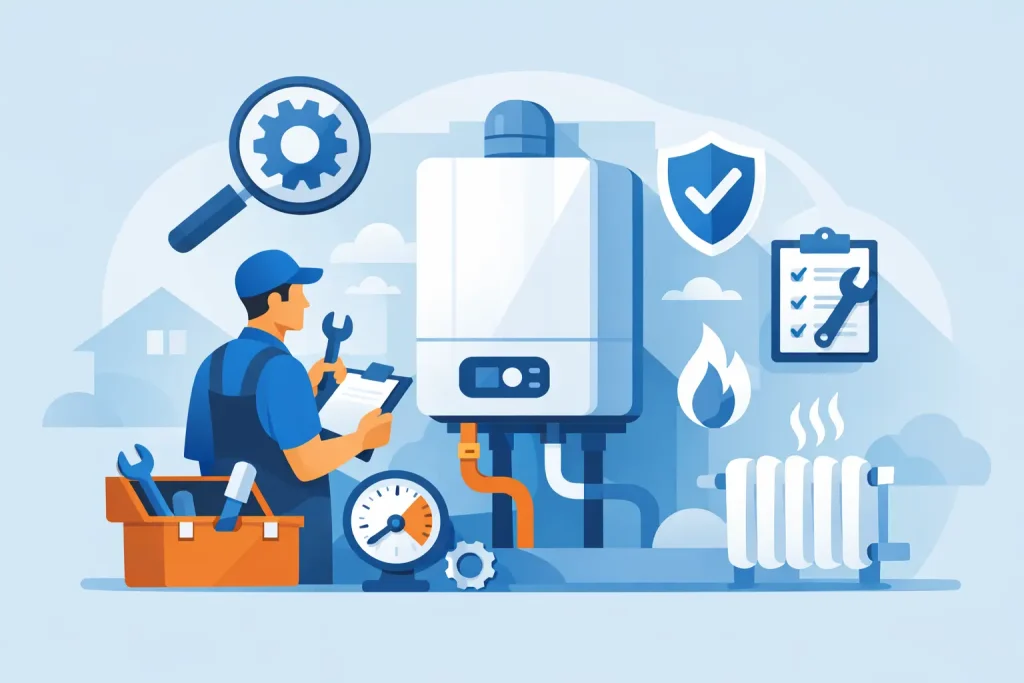
When a homeowner asks what is included in petrol boiler service, they are usually trying to work out one thing – is this a proper safety and maintenance visit, or just a quick look at the boiler before the engineer leaves? That is a fair question, because not every boiler service is carried out to the same standard.
A good service should do more than tick a box. It should check that the boiler is operating safely, clean key internal parts where required, identify wear before it turns into a breakdown, and give you a clear picture of the condition of the appliance. For households in West Lothian, that matters not only for comfort, but for safety, running costs and peace of mind.
What is included in petrol boiler service?
At its core, a petrol boiler service is an annual inspection, test and maintenance visit for your boiler. The exact steps can vary depending on the make, model and condition of the appliance, but a proper service normally includes visual checks, internal inspection, component cleaning, petrol and combustion testing, and safety checks on how the boiler is operating.
The engineer should start by checking the boiler and surrounding area. That includes looking for obvious signs of leaks, corrosion, staining, poor installation, or anything that suggests the appliance has been under strain. Pipework, seals, the flue and ventilation are all part of this first stage. If something does not look right before the casing is even removed, that tells you a lot.
From there, the boiler casing is usually taken off so the internal components can be inspected. This is where the difference between a basic visit and a thorough service often shows. Key parts such as the burner, heat exchanger, ignition components and condensate trap may need to be checked and cleaned, depending on the boiler type and the manufacturer’s instructions. A proper engineer does not guess here – they follow the servicing procedure for that appliance.
The checks that matter most
One of the most important parts of any petrol boiler service is making sure the boiler is burning petrol correctly. This is normally done with a flue petrol analyser, which measures combustion readings and helps confirm that the appliance is operating within safe limits. If those readings are off, the issue may be poor combustion, a developing fault, or a component that needs adjustment or further investigation.
Petrol pressure and petrol rate may also be checked where appropriate. These tests help confirm the boiler is receiving and using the correct amount of petrol. If pressure is too low or too high, the boiler may run inefficiently, struggle to heat properly, or suffer avoidable wear over time.
Safety devices are another key part of the service. The engineer should check that the boiler responds correctly to safety controls and that there are no signs of dangerous operation. Flame supervision devices, pressure relief arrangements and other safety-related components may be inspected depending on the appliance design.
The flue is especially important. This is the part that carries combustion gases safely away from the property. A service should include checking that the flue is secure, correctly fitted, not blocked, and showing no signs of damage or leakage. If a flue has deteriorated or has been affected by building work, that can become a serious issue.
Internal cleaning is not a small detail
Many customers assume all boiler services include proper internal cleaning. In reality, some appointments are little more than a quick visual once-over with a few readings taken. That may satisfy a minimum standard in some cases, but it does not always give the appliance the attention it needs.
A more thorough service goes further. If the boiler design allows and the manufacturer’s instructions call for it, internal parts should be cleaned carefully. That can include removing debris from the burner area, inspecting and cleaning the heat exchanger, and checking the condensate trap for blockages. These jobs help the boiler run more efficiently and can reduce the chance of nuisance lockouts or preventable faults.
It does depend on the boiler. Some modern appliances have specific service procedures, and not every part is removed on every visit. A good engineer will explain what has been done and why, rather than using vague language.
What else should be checked during the visit?
A proper service is not only about the combustion side of the boiler. The wider operation of the heating appliance matters too. The engineer should check the system pressure, inspect for water leaks, and assess whether the boiler is circulating heat as it should. Controls and thermostat operation may also be reviewed if there are signs of poor performance.
The expansion vessel may be tested where relevant, and the pressure relief valve discharge route should be visually assessed. These are not the most obvious parts to a homeowner, but they matter. If expansion issues are developing, you may notice pressure loss, dripping outside, or repeated topping up of the boiler. Catching that early can save a bigger repair later.
An engineer may also check the magnetic filter if one is fitted, especially if this forms part of the agreed service level. Cleaning a filter can help protect the boiler from sludge and system debris. Again, this depends on what is included in the service and the condition of the system as a whole.
Checks outside the boiler itself
Boiler servicing sometimes reveals issues that are not strictly faults with the appliance. For example, poor system water quality, partially blocked pipework, failing radiator valves or incorrect settings can all affect performance. A careful engineer should point these things out clearly.
That does not mean every issue gets fixed within the service price. It would be misleading to suggest that. A standard service is mainly about inspection, testing, cleaning and routine maintenance. Repairs, replacement parts and larger heating system work are usually separate. What matters is that you are told honestly if something extra is needed.
What is not usually included in a petrol boiler service?
This is where expectations need to be realistic. A petrol boiler service is not the same as a repair visit. If the engineer finds a failed fan, faulty pump, damaged printed circuit board, leaking heat exchanger or another defective part, that diagnosis may happen during the service, but the actual repair is usually quoted separately.
The same applies to major system problems such as heavy sludge, seized valves, damaged flue sections or faulty external controls. A service can uncover these issues, and that is one of its benefits. But solving them is often a different job.
Paperwork is another area where customers sometimes get confused. After a service, you should receive a record of the visit and what was checked. But a standard annual boiler service is not automatically the same as a landlord petrol safety certificate. Landlords normally need a formal petrol safety inspection and certificate for legal compliance. The two can sometimes be arranged together, but they are not identical.
Why a thorough service is worth it
Boilers rarely fail at a convenient time. More often, problems build quietly in the background until the weather turns cold or the hot water suddenly disappears. Annual servicing helps reduce that risk by spotting wear and safety concerns before they become urgent.
There is also the issue of efficiency. A boiler that is dirty, poorly adjusted or struggling with developing faults can burn more petrol than it should. You may not notice straight away, but over a year those small inefficiencies add up. Servicing will not turn an ageing boiler into a brand-new one, but it can help it perform as well as its condition allows.
For families, there is a simpler reason as well – safety. Petrol appliances need to be checked properly. Combustion, ventilation and flueing are not areas for guesswork or rushed appointments. That is why using a Petrol Safe registered engineer matters, and why the quality of the service matters just as much as the fact it happened.
Choosing the right engineer for the job
If you are booking an annual service, it is worth asking what is actually included before the appointment is confirmed. Will the casing be removed? Are combustion readings taken? Is internal cleaning part of the service where required? Will you get a clear record of the work carried out? Those are sensible questions.
The best engineers are usually straightforward about this. They will tell you what is covered, what is not, and whether your particular boiler needs anything more than routine servicing. That kind of clarity is a good sign. At Boiler-Serv, that thorough, no-shortcuts approach is exactly what many local homeowners and landlords are looking for.
A proper petrol boiler service should leave you with more than a stamp or a receipt. It should leave you knowing your boiler has been carefully inspected, safely tested and honestly assessed by someone who takes the job seriously. If your engineer can give you that confidence, you are getting real value from the visit.