
How to Repair Boiler Leak Problems Safely
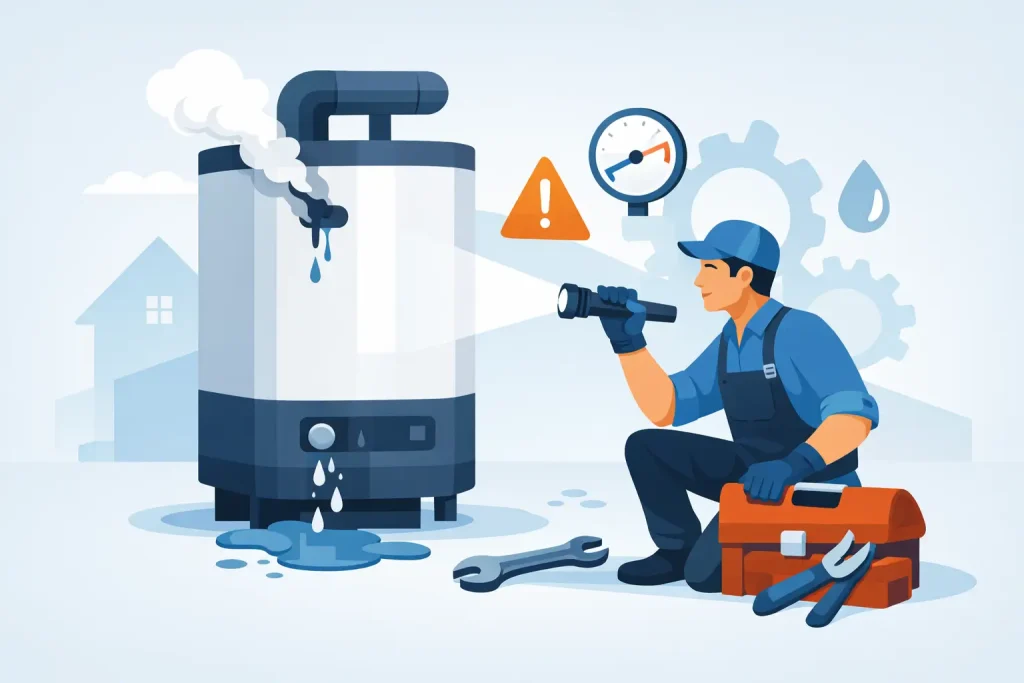
A puddle under the boiler tends to appear at the worst possible moment – before work, late at night, or just as the temperature drops. If you are searching for how to repair boiler leak issues, the first thing to know is simple: some leaks are minor and external, but many point to faults that should be checked properly and safely.
A leaking boiler is never something to ignore. Even a slow drip can damage cupboards, flooring and internal components, and in some cases it can be a sign of rising pressure, a failing seal, corrosion or a problem elsewhere in the heating system. The right response depends on where the water is coming from, how severe the leak is, and whether the boiler is a sealed system gas appliance that needs a Gas Safe engineer.
How to repair boiler leak issues without making it worse
Before touching anything, switch the boiler off at the controls. If there is active dripping near electrical parts, isolate the power if you can do so safely. Then place a container or towel under the leak to limit water damage.
What most homeowners can do safely is check the visible symptoms, not dismantle the boiler casing or interfere with gas components. If the leak is coming from a pipe joint beneath the boiler, the pressure relief pipe outside, or a visible valve on the system, that information is useful. If the water appears to be coming from inside the appliance casing, the safest assumption is that the fault needs professional repair.
If your boiler pressure is above the normal range, usually around 1 to 1.5 bar when cold for many domestic systems, do not keep topping up or adjusting the filling loop without understanding why the pressure has changed. A system that keeps over-pressurising often leaks for a reason.
Where boiler leaks usually come from
The location matters because it often points to the underlying fault. A leak underneath the boiler does not always mean the boiler itself is cracked or beyond repair. It may be something more contained, but it still needs the correct diagnosis.
Leaking pipe connections
Compression joints and valves can work loose over time, particularly where there has been vibration, past repair work or slight movement in pipework. These leaks are sometimes slow and may leave green staining, rust marks or a white residue around fittings.
A small seep from an exposed joint may occasionally be resolved by tightening a connection, but this is a job for someone who knows exactly which fitting they are adjusting. Overtightening can make the leak worse or damage the component.
Pressure relief valve discharge
If water is running through the copper discharge pipe outside, the pressure relief valve may be opening because the system pressure is too high. That can happen if the expansion vessel has lost charge, the filling loop has been left open, or there is another pressure-related fault.
This is a good example of why boiler leaks are often symptoms rather than standalone problems. Replacing or forcing a valve shut does not solve the cause.
Internal seals or pump leaks
Older boilers can develop leaks from worn seals, heat exchangers, pumps or other internal components. When parts expand and contract with heating cycles, a fault may show up only when the boiler is hot. You might notice drips after the heating has been running, then nothing once everything cools down.
Internal leaks should not be treated as a DIY repair. Modern boilers are compact, safety-critical appliances, and proper diagnosis matters.
Corrosion in the system
Sludge, dirty system water and long-term corrosion can contribute to leaks in radiators, valves, pipework and boiler components. In these cases, the leak you can see may only be part of the wider issue. A proper repair may involve more than replacing one part – it may also mean checking water quality, filters and the condition of the wider heating system.
What you can check before calling an engineer
If you want to know how to repair boiler leak faults sensibly, start by narrowing down the symptoms. There are a few safe checks that can help.
Look at the boiler pressure gauge and note the reading when the system is cold. Check whether the leak is constant or only happens when the heating or hot water is in use. Have a look beneath the boiler and around nearby valves and pipe joints for obvious drips or staining. If safe to do so, inspect the external discharge pipe to see whether water is coming from there.
It also helps to think about timing. Has the system recently been topped up? Has a radiator been bled? Has the pressure been climbing unusually fast? These details can help an engineer identify the fault more quickly.
What you should not do is remove the boiler case, tamper with sealed components, or keep resetting the appliance in the hope the problem disappears. That can delay the real repair and sometimes increase damage.
When not to attempt a boiler leak repair yourself
There is a difference between basic home checks and boiler repair. With gas appliances, that line matters.
If the leak is from inside the casing, if pressure keeps rising, if the boiler is making unusual noises, or if there are signs of corrosion around important components, book a qualified Gas Safe engineer. The same applies if the boiler has locked out, the pilot or flame is unstable, or you notice any smell of gas. In a gas emergency, follow the proper safety procedure immediately.
Landlords should be especially careful not to rely on guesswork. A leaking boiler in a tenanted property can affect heating, hot water, safety, and ongoing compliance responsibilities. A documented inspection and proper repair is the sensible route.
What a proper booster leak repair usually involves
The reason leaks are often misdiagnosed is that water travels. A drip from one point may originate higher up, only becoming visible once it reaches the bottom of the appliance.
A proper repair starts with identifying the true source. That may include checking the expansion vessel charge, testing the pressure relief valve, inspecting seals and joints, looking for signs of heat exchanger failure, and assessing whether poor system water has contributed to wear. On some jobs, the fix is straightforward. On others, there is a trade-off between replacing a part on an ageing boiler and advising whether further repairs are likely.
This is where a thorough approach matters. We do not cut corners by swapping a component without checking why it failed. If the pressure issue, sludge problem or faulty filling loop is left behind, the leak often returns.
Can a leaking boiler be repaired, or does it need replacing?
It depends on the age of the boiler, the failed part, and the condition of the rest of the system. A leaking valve, pump seal or external fitting may be a sensible repair. A severely corroded heat exchanger on an old boiler is a different conversation.
For most households, the practical question is not just repair cost today. It is whether the boiler is still reliable, whether parts remain available, and whether further faults are likely over the next year or two. Honest advice matters here. There is no value in paying for repeated call-outs if the appliance is already at the end of its useful life.
That said, not every leak means replacement. Many boilers can be repaired effectively once the real cause is identified and the system is checked properly.
Preventing another boiler leak
The best prevention is regular servicing carried out properly, not as a quick tick-box visit. A detailed service helps spot pressure issues, early corrosion, worn seals, blocked condensate routes, and poor system condition before they turn into a leak and a breakdown.
Keeping the system clean also helps. Dirty water and sludge shorten the life of pumps, heat exchangers and valves. If your heating is slow to warm up, radiators have cold spots, or repairs keep recurring, the boiler may not be the only issue. The wider system may need attention too.
It is also worth checking pressure only when needed and topping up carefully, rather than repeatedly adding water without understanding why the pressure has dropped. Too much water introduced too often can make matters worse rather than better.
The safest next step if your boiler is leaking
A leaking boiler is one of those faults that looks simple from the outside but often is not. If the water is clearly from a loose external connection, the fix may be relatively minor. If it is coming from inside the appliance, linked to pressure problems, or tied to internal wear, proper diagnosis is the difference between a lasting repair and another puddle next week.
If in doubt, switch it off, contain the water, and get it checked before the fault spreads. A careful repair done early is usually cheaper, safer and far less disruptive than waiting for a small leak to become a full breakdown.