How to Spot Boiler Pressure Problems
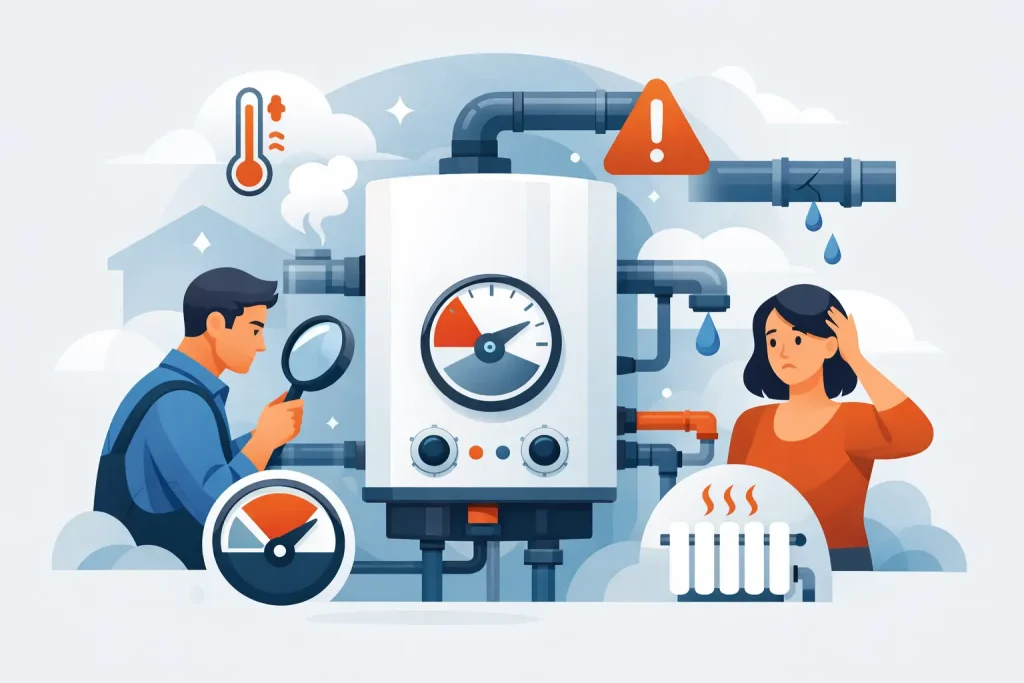
You usually notice boiler pressure problems at the worst possible time – when the heating will not come on properly, the hot water turns unreliable, or the boiler keeps needing attention when you have enough on already. Knowing how to spot boiler pressure problems early can help you avoid a full breakdown, reduce strain on the system, and get the right repair booked before a small fault becomes a bigger one.
Boiler pressure is one of those things most homeowners do not think about until the gauge starts behaving oddly. That is understandable. You should not need to be an engineer to recognise when something is wrong. But a little awareness goes a long way, especially if you want to keep your home safe and warm and avoid unnecessary disruption.
What boiler pressure should look like
Most sealed domestic heating systems run at around 1 to 1.5 bar when cold, although the exact figure can vary slightly depending on the boiler and system setup. When the heating is on and the system warms up, the pressure will usually rise a bit. That is normal.
What is not normal is pressure sitting too low, climbing too high, or moving up and down far more than it should. If the needle regularly drops below the recommended range, or heads up towards 3 bar, the boiler is telling you something needs attention.
If you have a digital display rather than a traditional pressure gauge, the same principle applies. Check the operating manual if you still have it, but in many cases the acceptable range is shown on the boiler itself.
How to spot boiler pressure problems before the boiler stops
In many homes, the first clue is not the pressure gauge at all. It is a change in how the heating system behaves. Radiators may take longer to warm up, some may stay cool at the top, or the boiler may lock out and show a fault code.
You might also find yourself topping the pressure up more often. An occasional top-up is not always a sign of major trouble, particularly after bleeding radiators, but regular re-pressurising is different. If the pressure keeps dropping and you are repeatedly using the filling loop, there is usually an underlying issue that needs proper diagnosis.
High pressure can be just as problematic. You may notice water dripping outside through the pressure relief pipe, or pressure rising sharply when the heating starts. Some boilers will shut down to protect themselves. That safety response is doing its job, but it also means the system should not be ignored.
Signs of low boiler pressure
Low pressure is one of the more common faults we see in domestic heating systems. The obvious sign is the gauge reading below the normal operating range, but there are usually other symptoms alongside it.
The boiler may fail to fire up properly, or it may start and stop more than usual. Heating performance can become patchy, with some radiators staying lukewarm while others work better. In some cases, you may hear gurgling in the pipework because air has entered the system.
A small drop in pressure after bleeding radiators can be expected. What matters is what happens next. If you top it up once and the pressure stays stable, that is often straightforward. If it drops again over days or even hours, that points to a leak, a faulty expansion vessel, or another system fault that needs checking properly.
Signs of high boiler pressure
High pressure often gets less attention from homeowners, but it can be just as serious. If the gauge rises close to 3 bar, or the boiler regularly loses water through the pressure relief valve, the system is under stress.
One common pattern is pressure looking acceptable when the system is cold, then climbing rapidly once the heating comes on. That can indicate an issue with the expansion vessel, which helps manage the natural increase in pressure as water heats up. If it is not working correctly, the pressure can spike rather than rise gradually.
You may also notice water marks or dripping from the copper discharge pipe outside. That is not something to dismiss as condensation without checking. If the pressure relief valve has opened, it is usually because the system pressure has gone too high.
Why boiler pressure goes wrong
There is no single answer, and that is where proper inspection matters. Low pressure is often caused by small leaks on radiators, valves, or exposed pipework. Sometimes the leak is obvious. Sometimes it is slight enough that you only notice staining, corrosion, or a steady drop on the gauge.
Other times, the issue sits inside the boiler or within a sealed component that should only be checked by a qualified engineer. A worn pressure relief valve, a failed expansion vessel, or faults linked to previous poor servicing can all affect pressure.
High pressure problems can happen after overfilling the system, but if the pressure keeps climbing on its own, that usually points to a fault rather than simple user error. It depends on the age of the boiler, the condition of the heating system, and whether the system has been maintained properly over time.
What you can safely check yourself
There are a few sensible checks a homeowner or landlord can make without taking risks. First, look at the pressure gauge when the system is cold, then note what happens after the heating has been running for a while. A slight rise is normal. A dramatic jump is not.
Next, check around radiators, radiator valves, and visible pipework for drips, staining, or crusty green or white deposits. Even a slow leak can affect pressure over time. If you have recently bled radiators, that may explain a pressure drop, but you should still make sure it stabilises afterwards.
You can also look outside at the pressure relief discharge pipe if it is accessible and safe to inspect from ground level. If it is dripping or leaving regular wet patches when the boiler is running, that is worth getting checked.
What you should not do is keep topping the system up again and again without finding the cause. Too much fresh water entering the system can add oxygen, which increases the risk of internal corrosion over time.
When to call an engineer
If the pressure keeps falling, rises too high, or the boiler is locking out, it is time to get it looked at properly. The same applies if you suspect a leak but cannot find the source, or if the boiler has started discharging water externally.
This is where a thorough approach matters. Pressure faults are sometimes treated as a quick reset job, but that can miss the root cause. A proper engineer should be checking the wider system, not just bringing the pressure back into range and leaving it there. That means looking at expansion vessel charge, pressure relief operation, visible leaks, internal components, and overall system condition.
For homeowners and landlords across West Lothian, that level of detail matters. A rushed visit may get the boiler running again temporarily, but it does not always prevent the same problem returning.
Can pressure problems damage the boiler?
They can. Low pressure can stop the boiler operating correctly and reduce heating performance, but ongoing pressure loss often points to water escaping somewhere it should not. That can affect components, system efficiency, and reliability.
High pressure can place strain on seals, valves, and other parts. If the pressure relief valve keeps opening, it can eventually fail to reseal properly, which creates another fault on top of the original one. Repeated pressure problems also tend to be a sign that routine servicing or system checks have been missed.
That does not mean every pressure issue is a major repair. Sometimes the fix is straightforward. But the sooner it is diagnosed properly, the better the chance of avoiding extra cost and inconvenience.
How servicing helps prevent pressure issues
Regular servicing will not prevent every fault, but it gives you a much better chance of catching problems early. A boiler should not just be given a quick once-over. Internal cleaning, safety testing, combustion checks, and system inspection all help build a clearer picture of how the appliance and heating system are performing.
Pressure-related faults are often easier to deal with when they are picked up before they cause repeated lockouts or damage. That is one reason a detailed service matters more than a basic tick-box visit. At Boiler-Serv, we do not cut corners, and that approach is especially important with faults that can have more than one underlying cause.
If your boiler pressure has started dropping, rising too high, or behaving unpredictably, trust what the system is telling you. A stable, healthy boiler should not need constant intervention. Getting it checked early is usually the simplest way to keep your home safe, your heating reliable, and your winter a lot less stressful.