Radiators Not Heating Properly? Start Here
A cold patch at the bottom of a radiator, one room that never seems to warm up, or a towel rail that stays lukewarm while the boiler is running – these are all common signs of radiators not heating properly. In most homes, the issue is not the radiator itself but a wider problem in the heating system, and the right fix depends on what the symptoms are telling you.
When heating is uneven, it is tempting to assume the boiler is failing. Sometimes that is true, but not always. Air trapped in the system, a stuck valve, sludge build-up, low system pressure or poor balancing can all leave radiators underperforming. The key is not to guess. A careful check can usually narrow down the cause quite quickly.
Why radiators not heating properly is not one single fault
Central heating systems work as a loop. The boiler heats the water, the pump moves it around the pipework, and each radiator releases that heat into the room. If one part of that chain is restricted, out of balance or not working as it should, the result is patchy heating.
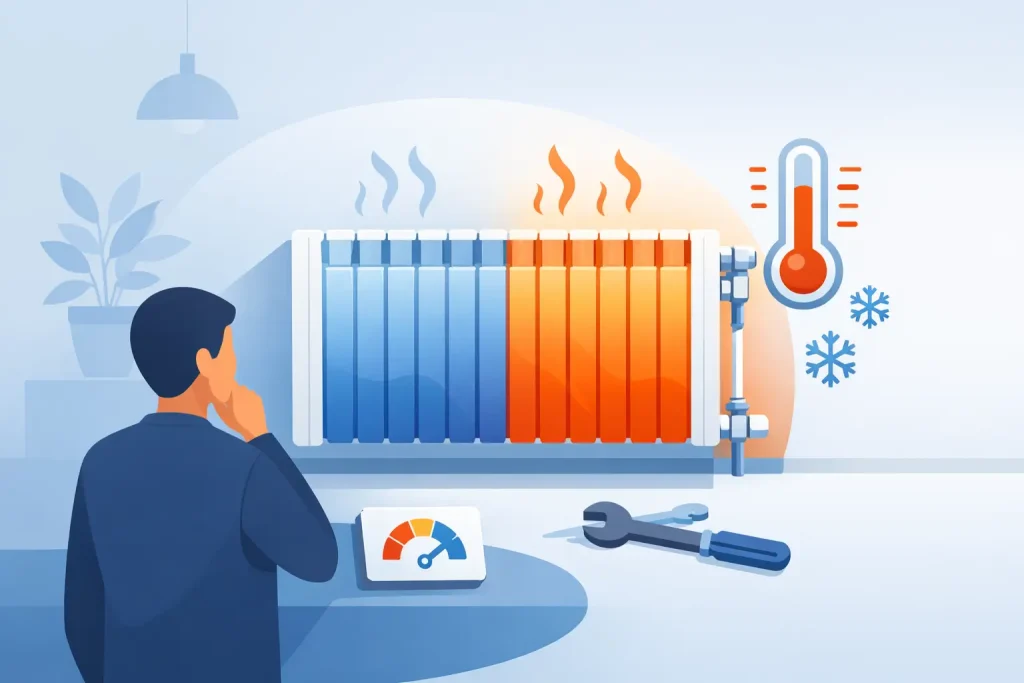
That is why the pattern matters. If every radiator is cooler than usual, you may be looking at a boiler, pump or pressure issue. If only one radiator is cold, the fault is more likely to be localised, such as trapped air or a valve problem. If the top is cold but the bottom is hot, that points in one direction. If the bottom is cold but the top is warm, that points in another.
A proper diagnosis saves time, avoids unnecessary parts, and helps prevent a small issue turning into a larger repair.
The most common reasons radiators are not heating properly
Trapped air in the radiator
If a radiator is cold at the top and warmer lower down, air is often the culprit. Air rises to the highest point and stops hot water circulating fully through the panel. This is one of the more common and more straightforward issues in domestic systems.
You may also hear gurgling or notice that the radiator takes far longer than usual to warm up. Bleeding the radiator can often solve it, but only if air is the actual problem. If the same radiator keeps needing bled, there may be a deeper issue with the system taking in air.
Sludge and debris in the system
If the radiator is warm at the top but cold at the bottom, sludge is a likely cause. Over time, corrosion deposits and magnetite can settle inside radiators, especially in older systems or ones that have not been cleaned properly. This restricts water flow and reduces heat output.
Sludge does not only affect one radiator. It can circulate around the system, wear components out, block pipework, and put extra strain on the boiler and pump. In these cases, a simple bleed will not fix the root cause.
Thermostatic radiator valve problems
Thermostatic radiator valves can stick, particularly after the heating has been off for a while. If one radiator stays cold while others heat normally, the valve pin may be stuck in the closed position, even though the head appears to be turned up.
This fault is easy to miss because from the outside everything looks normal. The heating may be calling for heat, the boiler may be running, but that individual radiator still does very little.
Lockshield or balancing issues
Sometimes the system is technically working, but not evenly. Hot water takes the path of least resistance, so radiators closer to the boiler may get very hot while those further away stay cooler. That usually points to balancing.
Balancing is the process of adjusting radiator flow so heat is distributed properly across the home. It is not glamorous, but it makes a real difference to comfort and efficiency. In houses with extensions, altered pipe runs or radiator upgrades, poor balancing is especially common.
Low pressure or circulation faults
If several radiators are underheating and the boiler pressure is low, the whole system can struggle. Likewise, if the pump is not circulating water effectively, radiators may heat very slowly or not fully at all.
These issues can overlap with boiler faults, so it is worth being cautious. Topping up pressure may be simple, but if pressure keeps dropping there may be a leak or another system problem that needs attention.
What you can check safely at home
If your radiators are not heating properly, there are a few sensible checks you can do before booking a visit. The aim is not to dismantle anything or take risks. It is simply to gather useful information.
Start by checking whether the problem affects one radiator, one area of the house, or the whole system. Then look at the boiler pressure gauge if you have a pressurised system. Many modern boilers work best around the manufacturer’s recommended range, often around 1 to 1.5 bar when cold, though you should always follow the instructions for your own appliance.
Next, make sure the radiator valves are open. If you have thermostatic heads fitted, try turning them up and down to see whether there is any response. You can also feel the radiator carefully to check whether it is cold at the top, bottom or all over. That heat pattern often tells you more than people expect.
If you know how to bleed a radiator safely, and the issue clearly looks like trapped air, that may be worth doing. Keep a cloth and container handy, and stop once water starts coming through cleanly. After bleeding, recheck the system pressure, as it may drop slightly.
What you should not do is force seized parts, remove valves, open boiler casing panels or keep topping up pressure repeatedly without understanding why it is dropping. That tends to turn a manageable repair into a more expensive one.
When radiators not heating properly means you need an engineer
There is a point where home checks stop being useful. If the radiator remains cold after bleeding, if several radiators are affected, if the system is noisy, or if the boiler is showing fault codes, it is time for a proper inspection.
The same applies if you suspect sludge. Chemical cleaning, powerflushing and filter checks need to be done correctly and for the right reason. Not every system needs the most aggressive cleaning method, and not every cold radiator means a full system flush. It depends on age, water quality, symptom pattern and the condition of the rest of the heating circuit.
For landlords, there is an added practical point. Tenants usually report the comfort issue first, but there can also be compliance and maintenance responsibilities behind it, especially if poor heating is linked to a wider boiler or gas safety concern. A clear diagnosis and proper paperwork matter.
How a thorough heating check finds the real cause
This is where rushed visits often fall short. A quick glance and a guess may get heat back temporarily, but it does not always solve the underlying fault. A proper heating engineer should look at the wider system, not just the cold radiator in isolation.
That means checking boiler operation, system pressure, pump performance, radiator temperature differences, valve condition, water quality and whether there are signs of internal contamination. If the issue is recurring, the engineer should also ask what has happened before, whether the system has been cleaned, and whether any radiators or controls have been changed recently.
At Boiler-Serv, that careful, no-shortcuts approach matters because heating faults are often connected. A radiator problem can be the first visible sign of sludge, poor maintenance or a boiler component beginning to struggle. Finding the cause early usually saves money and hassle later.
Preventing the same issue coming back
Some radiator faults are one-off issues. Others are symptoms of neglected maintenance. If radiators are slow to heat every winter, if bleeding becomes a regular job, or if black water comes out when the system is drained, the system probably needs more than a minor adjustment.
Regular boiler servicing helps because it gives the whole heating system a health check, not just the boiler burner. If there are early signs of circulation problems, dirty system water or control issues, they can often be picked up before you lose heating completely.
System filters also make a difference where fitted and maintained properly. They help catch magnetic debris before it settles where it should not. Combined with appropriate cleaning and inhibitor protection, they can extend the life of boilers, pumps and radiators alike.
The main thing is not to ignore uneven heating because the boiler still appears to be working. Homes rarely get more efficient by accident. If one radiator is underperforming now, the rest of the system may not be far behind.
If your radiators are not heating properly, the best next step is a calm, methodical one – check the obvious, avoid guesswork, and get the system looked at properly before a comfort issue becomes a breakdown.