Why Are Radiators Cold Downstairs? Common Causes
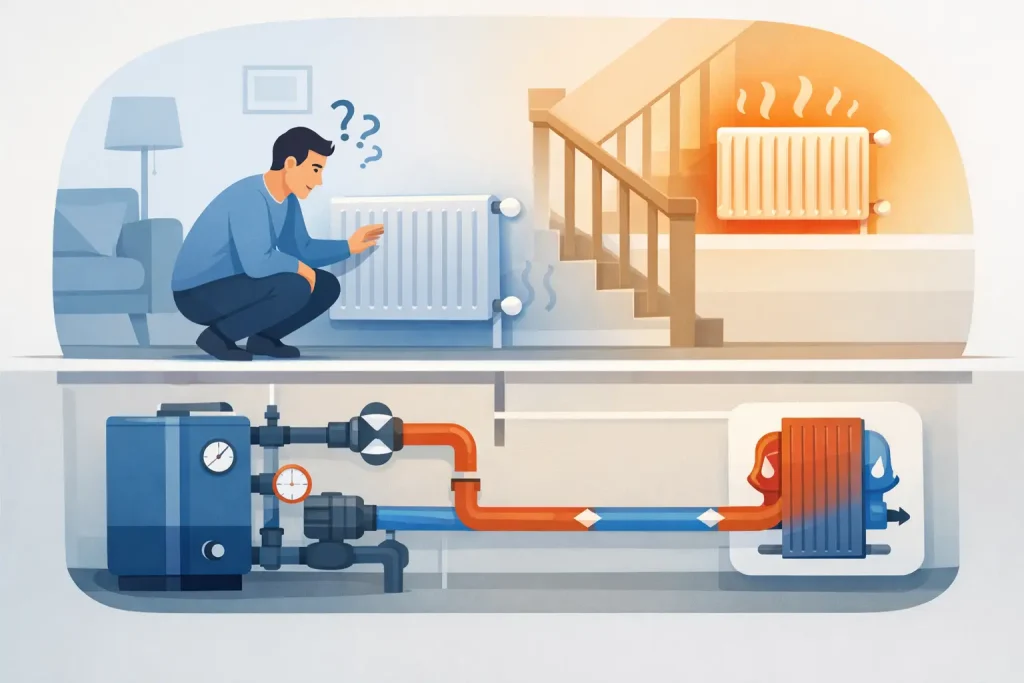
A radiator that is hot at the top but noticeably cold downstairs is not just frustrating on a cold West Lothian morning. It is often a sign that heating water is not circulating properly through the radiator. If you are asking, “why are radiators cold downstairs?”, the most likely answer is a build-up of sludge and debris at the bottom of the system.
That does not automatically mean you need a new boiler or a costly replacement. The right remedy depends on the condition of the radiator, the rest of the heating system and whether there are other warning signs. A careful diagnosis matters because a quick fix can mask the cause rather than resolve it.
What does “cold downstairs” mean?
Most people use the phrase to describe the bottom of a radiator being cold while the top is warm. This is different from a radiator that is cold on the ground floor of the house. The temperature pattern gives a useful clue to what is happening inside the heating system.
When a radiator is cold at the bottom and warmer at the top, the usual issue is sediment collecting in its lower channels. Heating water should flow freely through every part of the radiator. Over time, however, tiny particles of rust, limescale and corrosion debris can settle at the bottom, reducing the area that can heat up.
If the radiator is cold at the top instead, trapped air is more likely to the cause. That usually calls for bleeding the radiator, provided the system pressure is checked afterwards on a sealed system.
Why are radiators cold downstairs? The most common cause
Sludge and debris in the radiator
Central heating systems contain metal components, water and, in some homes, many years of accumulated wear. As internal metal surfaces slowly corrode, they can create a dark magnetite sludge. This material travels around the system before settling in low-flow areas, particularly at the bottom of radiators.
A radiator affected by sludge may feel warm near the valves and across the upper section, but cold, patchy or completely unheated at the base. You may also notice that the room takes longer to warm up, even though the boiler is running normally.
The problem can start with one radiator and gradually affect others. Left untreated, debris can restrict circulation more widely and place extra strain on pumps, valves and the boiler heat exchanger. That is why dealing with poor circulation early is usually kinder to both your comfort and your heating system.
Restricted flow through valves or pipework
Sludge is common, but it is not the only possibility. A thermostatic radiator valve may be partly stuck, especially if it has remained in the same position for a long time. The lockshield valve at the other end of the radiator may also be too restricted, preventing enough water from passing through.
Older systems can have narrower pipework or sections where debris has collected. In some cases, a weak circulating pump or a system that has not been balanced properly means hot water is reaching some radiators more easily than others.
A single radiator that is cold at the bottom may point to a local blockage. Several radiators with uneven heat may suggest a wider circulation or water-quality issue. This is where an engineer should look at the whole system rather than treating each radiator in isolation.
Poor system balancing
Balancing controls how the heated water is shared between radiators. Without it, the radiators closest to the boiler can take most of the flow, while those further away struggle to reach temperature.
Poor balancing does not always create a cold lower section by itself, but it can make an existing sludge problem more obvious. You may find that radiators in one part of the house heat quickly while bedrooms, extensions or upstairs rooms remain lukewarm. Correct balancing can improve comfort and reduce the temptation to turn the boiler temperature higher than necessary.
Safe checks you can make before booking a visit
You do not need to dismantle anything to gather useful information. Start by turning the heating on and allowing it enough time to warm up. Carefully feel the radiator in several places, avoiding the pipework and valves if they are very hot. Is the top warm but the bottom cold? Is only one side heating? Or is the whole radiator cooler than the others?
Check that the thermostatic valve is set above the room temperature and has not been turned down accidentally. If you have a lockshield valve, do not make large adjustments without noting its starting position. These valves affect the system balance, and random changes can create a new problem elsewhere.
If you have a sealed boiler system, check the pressure gauge when the system is cold. Many systems operate around 1 to 1.5 bar when cold, but always follow the guidance for your own boiler. Low pressure can reduce heating performance, although it would not normally be the sole reason for a radiator being cold only at the bottom.
Listen for unusual noises as well. Banging, gurgling, whistling or frequent boiler pressure drops are worth mentioning to an engineer. So is discoloured water when a radiator is bled. These details help build a clearer picture of the system condition.
Do not remove radiator valves, drain the system or take the boiler casing off. Boiler work must be carried out by a Gas Safe registered engineer, and a poorly managed drain-down can lead to leaks, pressure problems and damage to flooring or furnishings.
Why bleeding is not usually the answer
It is easy to assume every cold radiator needs bleeding. Bleeding releases trapped air, which rises to the highest point in a radiator. Therefore, it is most useful when the top of the radiator is cold and the lower section is warm.
When the bottom is cold, bleeding may make little difference because the issue is generally solid debris rather than air. Repeatedly bleeding radiators can also lower system pressure and introduce fresh oxygen-rich water when the system is topped up. That can encourage further internal corrosion over time.
If you are unsure, do not guess based on one symptom. The shape of the cold area, the behaviour of other radiators and the condition of the heating water all matter.
How a professional repair is chosen
A proper heating inspection should establish whether the issue is limited to one radiator or affecting the wider system. An engineer can check valve operation, circulation, boiler performance, system pressure and radiator temperature patterns before recommending work.
For a localised blockage, removing and flushing an individual radiator may be sufficient. This can be a sensible option if the rest of the system is heating evenly and the water is reasonably clean. It is not always the best long-term answer where several radiators show the same symptoms.
Where sludge is present throughout the system, a more thorough central heating clean may be recommended. Depending on the system, this can involve circulating an appropriate cleaning chemical, flushing out contaminated water and checking that flow is restored. The system should then be refilled correctly and protected with inhibitor to slow future corrosion.
A magnetic filter can also be valuable after cleaning. It captures magnetic debris before it reaches sensitive boiler components, but it needs checking and cleaning as part of ongoing maintenance. A filter is protection, not a substitute for dealing with existing heavy contamination.
At Boiler-Serv, we do not cut corners by assuming every cold radiator needs the same treatment. The aim is to identify what is restricting heat in your home, explain the options clearly and carry out the work needed to keep the system working efficiently.
When to arrange an engineer promptly
A cold patch on one radiator is rarely an emergency, but certain signs should not be left to develop. Arrange a heating engineer promptly if several radiators are heating poorly, boiler pressure keeps falling, there is visible water around valves or pipes, the boiler is making new noises, or your hot water and heating are both unreliable.
Landlords should take uneven heating seriously too. While a cold lower radiator section does not necessarily mean an immediate safety fault, tenants are entitled to a properly maintained heating system. Keeping records of servicing, repairs and any system cleaning helps prevent repeat problems and supports a well-maintained property.
A heating system should warm rooms evenly without constant adjustments, unexplained pressure loss or radiators that are only half doing their job. Acting while the fault is still small can often restore comfort with less disruption and help protect the boiler for the winters ahead.