
How to Reset Boiler Safely at Home
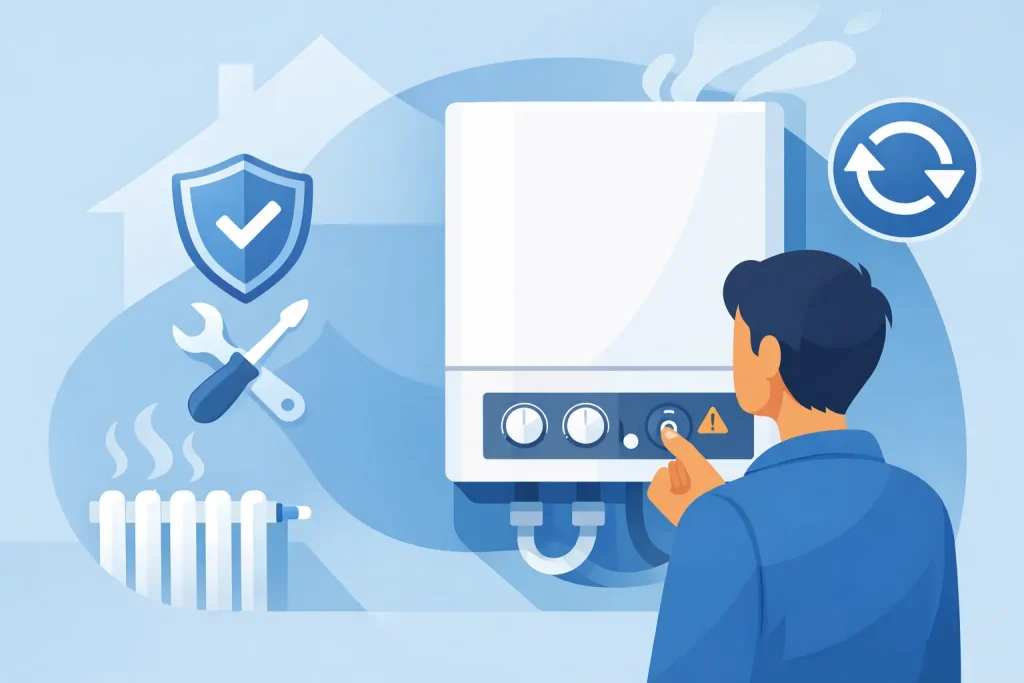
A boiler that suddenly stops working often leaves people doing the same thing straight away – pressing the reset button and hoping for the best. Sometimes that works. Sometimes it does not. If you are wondering how to reset boiler safely, the key is knowing when a simple reset is reasonable and when the boiler is telling you something more serious is wrong.
A reset is not a repair. It is a way of restarting the appliance after a fault or lockout. Used properly, it can get your heating or hot water back on. Used carelessly, it can delay the right fix and in some cases create a safety risk. That is why it pays to take a careful, no-shortcuts approach.
What a boiler reset actually does
Modern boilers are designed to shut themselves down when they detect a fault. This is usually called a lockout. It is a built-in safety feature. The boiler may lock out because of low pressure, ignition problems, overheating, frozen condensate in cold weather, or a temporary interruption to the gas or power supply.
When you press reset, you are telling the boiler to clear that lockout and try to start again. If the underlying issue was minor and temporary, it may fire up normally. If the same fault is still present, it will often lock out again.
That is the important part. One reset can be sensible. Repeated resets are usually a sign that the fault needs proper diagnosis.
How to reset boiler safely step by step
Before touching the boiler, stay calm and take a moment to look and listen. If you can smell gas, do not reset anything. Leave the property if needed, turn off the gas supply if you know how to do so safely, and get emergency help straight away. The same applies if you can see scorching, water leaking onto electrical parts, or hear unusual banging that sounds severe rather than the odd pipe noise.
If there is no obvious danger, check the display or fault light on the front of the boiler. Many models show an error code or flashing symbol. That code can help point to the issue, and it is worth making a note of it before you reset.
Next, check whether the problem could be something simple. Has the power tripped? Is the heating programmer set correctly? Has the room thermostat been turned down? Is the boiler pressure too low? On many domestic systems, the pressure should usually sit around 1 to 1.5 bar when cold, though the exact range depends on the manufacturer.
If everything looks normal, follow the manufacturer instructions for your model. On many boilers, you press and hold the reset button for a few seconds until the appliance begins its restart sequence. On others, the reset may be part of a dial or menu setting. Do not force controls or guess if you are unsure.
Once reset, give the boiler a few minutes. You may hear the fan start, ignition begin, and then the burner light. Watch the display. If the boiler runs normally and continues operating, keep an eye on it over the next day or two. If it locks out again, there is an underlying issue that still needs attention.
When a reset is usually safe to try
There are situations where a single reset is often reasonable. A brief power cut can interrupt normal operation. A momentary drop in gas supply pressure can cause a lockout. Very cold weather may freeze an external condensate pipe on certain condensing boilers. Some boilers also lock out after pressure has fallen too low and then been corrected.
In these cases, a reset may restore normal service once the immediate issue has passed. Even then, the detail matters. If low pressure caused the lockout, for example, the real question is why the pressure dropped in the first place. It might be nothing serious, or it could point to a leak, a faulty expansion vessel, or another system problem.
That is why homeowners and landlords are usually best treating a reset as a first check, not a full solution.
When you should not keep resetting the boiler
If the boiler fails once, resets, and works normally, that is one thing. If it keeps locking out every few hours or every day, pressing reset over and over is not the answer.
Repeated lockouts can be linked to ignition faults, poor circulation, blocked condensate, fan problems, flame detection issues, overheating, or component failure. Some of those are inconvenient. Some have clear safety implications. None are improved by repeatedly restarting the appliance.
You should stop and arrange professional help if the boiler:
- locks out again straight after reset
- shows the same fault code repeatedly
- loses pressure regularly
- leaks water
- makes unusual noises such as kettling, vibrating, or loud banging
- gives off a gas smell or signs of scorching
- runs intermittently with unreliable heating or hot water
A proper repair starts with diagnosis. That means checking the appliance, controls, combustion performance where appropriate, and wider heating system condition rather than taking a guess.
How to reset boiler safely if the pressure is low
Low boiler pressure is one of the most common reasons people find themselves without heating. If the pressure gauge is below the normal range, some boilers will not operate until pressure is restored.
This is where caution matters. Topping up pressure through the filling loop is often straightforward, but it should be done carefully and only to the recommended level. Adding too much water can create a different problem, and if pressure keeps dropping there is a fault somewhere that needs investigating.
If you are confident and your manufacturer instructions allow it, you can slowly open the filling loop valves and watch the gauge rise. Once it reaches the correct pressure, close the valves fully. Then try a reset if required by the boiler.
If you are not sure which valves are which, or the pressure behaves oddly, stop there. Guesswork around filling loops can lead to over-pressurising the system or masking a larger issue.
Fault codes matter more than most people think
One of the most useful things you can do before resetting is note the fault code. Different manufacturers use different codes, but they are there for a reason. They help narrow down whether the issue relates to ignition, flame loss, pressure, overheating, circulation or condensate problems.
For a homeowner, the code helps you explain the issue clearly if you need an engineer. For a landlord, it also helps show that you have acted promptly and responsibly when a tenant reports a heating problem.
What the code does not do is replace diagnosis. The same code can have more than one cause, which is why proper testing still matters.
Homeowner and landlord common sense
If you live in the property, you are usually balancing two things – getting the heating back on quickly and not making matters worse. A single reset after a basic safety check is often sensible. Beyond that, caution is the better route.
If you are a landlord, the standard should be even clearer. Tenants need safe, reliable heating and hot water, and recurring boiler faults should be addressed properly rather than patched over with repeated resets. Keeping records of servicing, repairs and safety checks is part of that responsibility.
Across West Lothian, a lot of avoidable call-outs start the same way: the boiler has been resetting for weeks before finally giving up altogether. Early attention usually means a safer and more straightforward fix.
Why servicing reduces reset problems
Boilers often reset because they are responding to faults that have been building up for some time. Dirty components, poor combustion, blocked condensate routes, sludge in the system, sensor issues, and neglected pressure problems can all contribute.
Regular servicing helps catch those issues before they lead to breakdowns. More importantly, a thorough service is not just a quick visual once-over. Proper internal cleaning, safety checks, combustion testing where needed, and inspection of the wider system can make a real difference to reliability.
That is especially true for older boilers and for properties where the heating is heavily used through winter.
The safest rule to follow
If you are ever unsure how to reset boiler safely, keep the rule simple: one careful reset after basic checks is reasonable, but anything beyond that needs expert attention. Never ignore smells, leaks, scorch marks, repeated lockouts or unusual noise. And never treat a reset button as a repair button.
At Boiler-Serv, we see plenty of cases where a cautious early call prevents a bigger breakdown later on. That approach saves stress, protects the appliance, and most importantly helps keep your home safe and warm.
If your boiler has locked out once, stay observant. If it keeps asking for a reset, it is asking for more than that.