Can a Boiler Leak Carbon Monoxide? Warning Signs
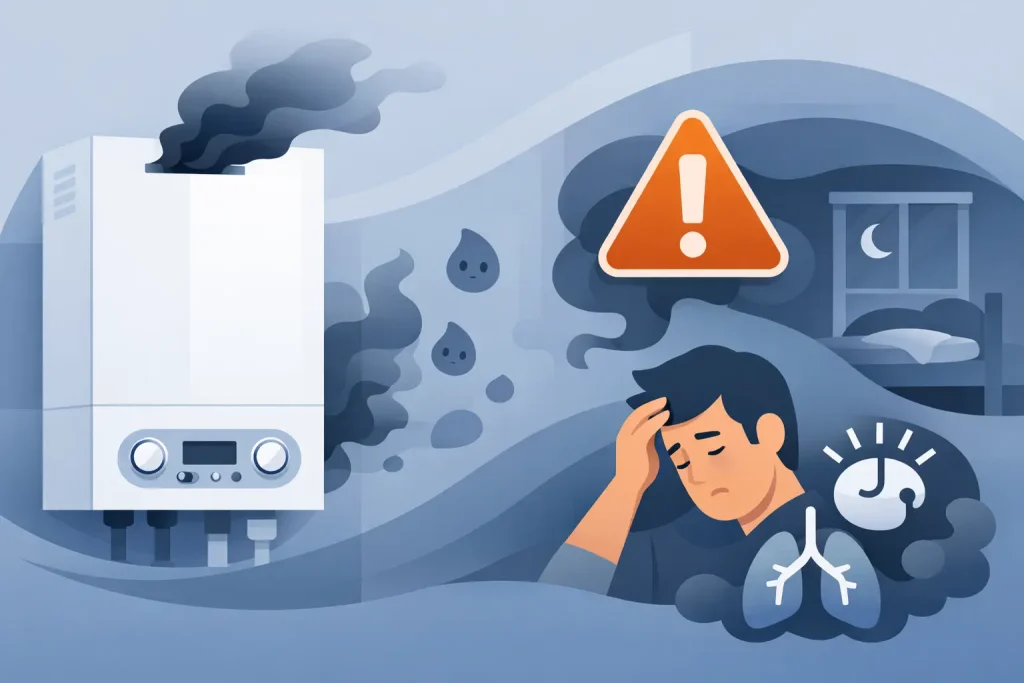
A boiler can appear to be heating the house normally while a fault develops inside it or around the flue. That is what makes carbon monoxide such a serious concern for homeowners and landlords. Can a boiler leak carbon monoxide? Yes. More accurately, a faulty or poorly maintained gas boiler can allow carbon monoxide, or combustion gases containing it, to escape into your home rather than being safely carried outside.
Carbon monoxide is colourless and has no smell or taste. You cannot rely on noticing a strange odour before taking action. The right protection is a properly maintained boiler, a suitable carbon monoxide alarm and prompt attention when something does not seem right.
Can a Boiler Leak Carbon Monoxide Into Your Home?
A modern gas boiler is designed to burn gas safely in a sealed combustion chamber. It draws in air, burns the gas and sends the waste gases outside through the flue. When the boiler, flue and ventilation are all in good condition, carbon monoxide should not enter the living space.
Problems arise when that process is disrupted. Incomplete combustion can produce higher levels of carbon monoxide, while a damaged flue, loose flue connection or failed seal can let combustion products escape. A blocked flue can also prevent gases from leaving the property as intended.
It is worth separating a carbon monoxide concern from a gas leak. Natural gas is treated with a distinctive smell, which is why people can often detect it. Carbon monoxide has no smell. Both need urgent attention, but they are different hazards and can have different causes.
What Causes a Boiler Carbon Monoxide Leak?
Carbon monoxide issues are not always caused by one obvious breakdown. They can develop through wear, poor installation, inadequate servicing or alterations to the property that affect ventilation or the flue route.
A boiler that has not been serviced for several years may have debris in the burner, heat exchanger or condensate arrangements that affects how it operates. Internal components can also deteriorate over time. A detailed service should involve more than a quick visual check: the engineer needs to inspect the appliance, clean relevant components where required, check safe combustion and test that the flue is doing its job.
The flue deserves just as much attention as the boiler itself. It may run through a cupboard, loft space, boxed-in area or external wall before it reaches outside. Damage, corrosion, poor joints or an obstruction at the terminal can all create a risk. If building work, a new extension or external cladding has changed access to the flue, it should be assessed by a Gas Safe registered engineer.
Older boilers can be more prone to wear, but age alone does not mean a boiler is unsafe. A well-maintained older appliance may be operating safely, while a newer boiler with an installation fault or neglected maintenance may not be. The condition of the specific appliance is what matters.
Warning Signs of Carbon Monoxide From a Boiler
A carbon monoxide alarm is the only dependable way to detect the gas itself. However, there can be clues that a gas appliance is not burning correctly or venting safely. Do not ignore the following signs, particularly if more than one is present:
- a carbon monoxide alarm sounding or displaying a fault or end-of-life warning
- black, brown or sooty marks around the boiler, flue, fireplace or nearby surfaces
- a yellow or orange flame on a gas appliance that should normally show a crisp blue flame
- frequent boiler lockouts, unusual noises, poor performance or a pilot light that repeatedly goes out
- excessive condensation on windows in the same room as a gas appliance, where this is unusual for the property
Physical symptoms can also be a warning, especially when they improve after leaving the property. Headaches, dizziness, nausea, tiredness, breathlessness and confusion may be associated with carbon monoxide exposure. These symptoms can resemble flu or a virus, so it is sensible to consider whether several people in the home feel unwell at the same time, or whether symptoms occur mainly when the heating is on.
Never use symptoms as a test. Carbon monoxide can affect people differently, and children, older people, pregnant people and those with heart or breathing conditions may be particularly vulnerable.
What to Do if You Suspect Carbon Monoxide
If your carbon monoxide alarm sounds, or you suspect a boiler or other gas appliance may be producing carbon monoxide, treat it seriously. Do not try to diagnose the fault yourself or restart the boiler to see whether it settles down.
If it is safe to do so, turn off the suspected appliance. Open doors and windows on your way out, then get everyone into fresh air. If anyone feels unwell, call 999 for urgent medical help. Follow the instructions supplied with your carbon monoxide alarm and seek advice from the relevant emergency services or gas emergency provider where necessary.
Do not re-enter the property or use the appliance until it has been checked and declared safe by a Gas Safe registered engineer. An engineer can test for safe combustion, inspect the boiler and flue, identify the source of the problem and explain clearly whether a repair is possible or whether parts need to be replaced.
If you smell gas as well as suspecting a fault, avoid switches, naked flames and anything that could create a spark. Leave the property and contact the gas emergency service from a safe location.
How Annual Boiler Servicing Helps Prevent Carbon Monoxide Risks
Annual servicing is not just about keeping the heating working through a West Lothian winter. It is a practical safety check that can find faults before they become a more serious issue.
A proper boiler service should include checks on the appliance condition, burner operation, gas pressures where appropriate, safety devices, seals, condensate arrangements and flue integrity. The engineer should also carry out combustion analysis to confirm that the boiler is burning gas correctly and that the products of combustion are within safe operating parameters.
At Boiler-Serv, the approach is to look beyond a basic tick-box visit. Internal cleaning and inspection, where appropriate for the appliance, can help uncover developing faults that may otherwise be missed. You should also receive a clear explanation of what has been checked, any concerns found and what work, if any, is recommended. No homeowner should be left guessing whether their boiler has simply been looked at or properly assessed.
For landlords, annual gas safety checks are a legal responsibility for relevant gas appliances and flues. They are also an opportunity to protect tenants and identify maintenance needs early. Keep certificates and service records together, and arrange access in good time rather than waiting until the deadline is close.
Carbon Monoxide Alarms Are Essential, Not Optional
A boiler service reduces risk, but it does not replace a carbon monoxide alarm. Fit an audible alarm that meets the appropriate British safety standard, follow the manufacturer’s siting instructions and check it regularly using the test button. Alarms have a working life, so note the replacement date rather than assuming a unit will last indefinitely.
An alarm should not be installed right beside the boiler or in a position where steam, cooking fumes or poor placement could affect it. The instructions supplied with the particular model are the best guide. In Scotland, carbon monoxide alarms are required in rooms containing a fixed combustion appliance, with requirements that apply to homes as well as rented properties.
A detector is there to give you an early warning, not to provide reassurance that maintenance can be delayed. If the boiler is overdue a service, is behaving differently or has been condemned or switched off by an engineer, act on that advice.
Keeping your family safe and warm comes down to taking small warning signs seriously. Arrange regular servicing, use a suitable alarm and call a qualified engineer promptly if you have any concern about your boiler or flue.