
Magnetic Filter vs Power Flush: Which Works Best?
A boiler can be working hard long before it stops working altogether. Cold patches on radiators, noisy pipework, a pump that sounds strained, or a boiler that regularly loses pressure can all point to debris circulating through the heating system. When deciding between a magnetic filter vs power flush, the right answer depends on what is already inside your system – and what you need to prevent happening next.
A magnetic filter and a power flush do different jobs. One collects contamination as water circulates every day; the other is a deeper cleaning process designed to remove existing sludge and debris. Neither should be treated as a one-size-fits-all fix. A proper assessment helps avoid spending money on work that does not address the real cause of the problem.
Magnetic filter vs power flush: the key difference
Central heating systems contain water, metal components and, in many homes, radiators that have been in place for years. Over time, a chemical reaction within the system can create magnetite – a dark, iron-based sludge. This debris can settle in radiators, restrict water flow and reach sensitive boiler components such as the pump, heat exchanger and valves.
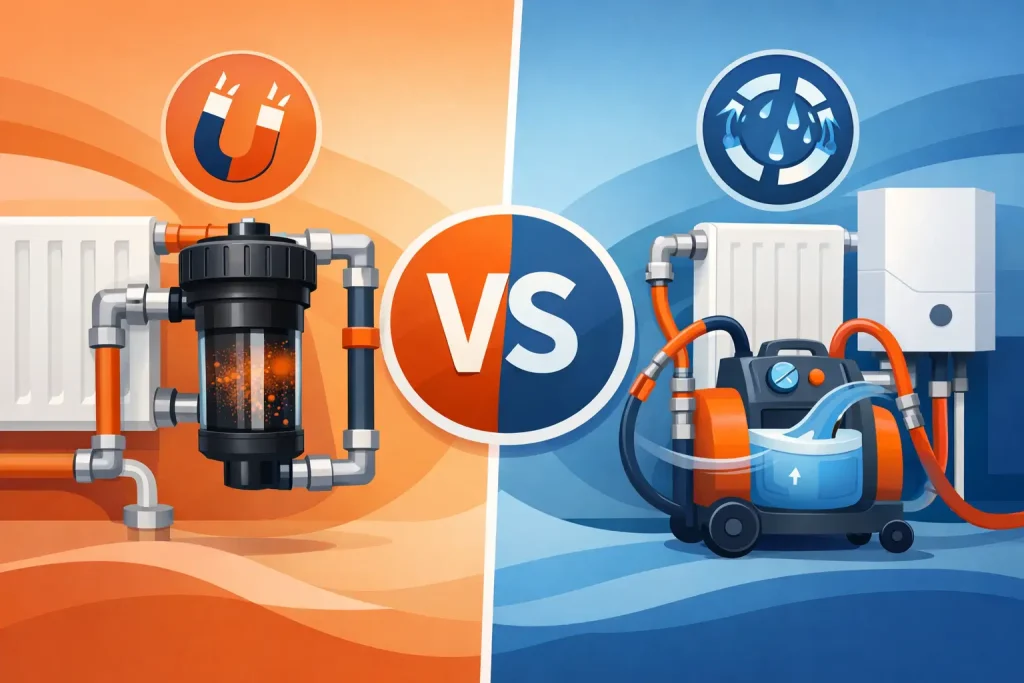
A magnetic filter is fitted to the heating pipework, usually close to the boiler. It contains a powerful magnet that catches magnetic debris before it can continue around the system. During an annual boiler service, the filter can be cleaned and checked. It is an ongoing line of defence, helping to keep newly circulating debris away from the boiler.
A power flush is a more intensive clean. A specialist flushing machine is connected to the heating system and sends water and cleaning chemicals through at a controlled flow. Each radiator is worked through to dislodge and remove sludge, rust particles and other debris. The system is then thoroughly rinsed before inhibitor is added to help protect it afterwards.
Put simply, a magnetic filter helps prevent contamination from causing damage in the future. A power flush deals with contamination that is already affecting the system.
When a magnetic filter is the sensible choice
A magnetic filter is often a very worthwhile addition when a boiler is being replaced, when a relatively clean system is being maintained, or where there are no clear signs of serious sludge build-up. Modern boilers have narrow internal waterways and expensive components, so keeping debris away from them matters.
It can also be useful where a system has previously been cleaned. Once a power flush has removed as much contamination as possible, a filter helps collect the small amount of debris that can continue to form over time. This combination gives the system better long-term protection than cleaning alone.
For homeowners, the benefit is straightforward: a filter is a practical way to reduce the risk of dirt reaching parts of the boiler where blockages or wear can lead to repairs. It does not make a neglected system instantly clean, but it can support efficiency and help protect an investment in a new boiler.
A filter should not be fitted and forgotten. Its magnet needs cleaning as part of regular maintenance, and the system water should contain the correct level of inhibitor. A thorough boiler service is a good opportunity to check both.
When a power flush may be needed
A power flush is more likely to be recommended where there is evidence that sludge has already built up within the system. Common warning signs include radiators that are cold at the bottom, several radiators taking a long time to heat up, discoloured water when a radiator is bled, repeated pump or valve faults, and boiler noise caused by poor circulation.
It may also be appropriate before fitting a new boiler to an older heating system. Installing an efficient new boiler onto dirty pipework and radiators can allow old debris to enter the new appliance from day one. Manufacturers commonly expect the system to be properly cleaned and protected as part of installation requirements.
However, a power flush is not automatically the answer every time a radiator feels cold. A radiator may need balancing, a thermostatic radiator valve may be stuck, pressure may be too low, or there may be air in the system. These faults need diagnosing properly. Cleaning a system that is fundamentally suffering from a faulty valve will not solve the problem.
What happens during a proper power flush?
A worthwhile power flush is not a quick connection of a machine followed by a few minutes of circulating water. The process should be methodical, with each part of the heating system given attention.
First, the condition of the system should be assessed. The engineer will look at the boiler, radiators, pipework and existing controls, and may test a sample of system water. Cleaning chemicals are then introduced to help break down sludge and deposits. The flushing machine circulates water through the system, while individual radiators can be isolated and worked on to encourage debris to move.
Where appropriate, radiators may be agitated to loosen settled material. The system is flushed until the water runs acceptably clear, then refilled with clean water and a suitable inhibitor. The boiler, pump, pressure and radiator performance should be checked at the end.
The time required varies. A small, straightforward system may take less time than a larger home with many radiators, older pipework or heavy contamination. Anyone promising a fixed result without looking at the system first should be treated with caution.
The limits of both options
A magnetic filter is excellent at catching magnetic particles, but it cannot remove all types of debris and cannot clean sludge that has already settled at the bottom of radiators. If circulation is poor because radiators are heavily blocked, fitting a filter alone may not restore heat output.
Likewise, a power flush is not a repair for corroded radiators, damaged pipework, faulty pumps or leaking joints. In some older systems, removing built-up debris can expose weaknesses that were already present. That does not mean cleaning caused the issue; it may simply reveal a component that was close to failing.
There are also systems where a gentler approach is more suitable. Very old pipework, known leaks or fragile radiators require careful consideration. An experienced heating engineer should explain the condition of the system, the likely benefit of cleaning and any risks before work starts. Clear advice is better than making promises that cannot be guaranteed.
Is a magnetic filter enough after a new boiler installation?
In many cases, a magnetic filter is a sensible part of a new boiler installation, but it should not replace proper system preparation. If the existing system water is dirty or there are signs of sludge, it may still need cleaning before the boiler is commissioned.
Think of it like fitting a good filter to a car after filling it with contaminated oil. The filter will help, but it cannot undo the effects of putting dirt through the engine in the first place. A clean, inhibited system with a correctly fitted magnetic filter gives a new boiler the best start.
Protecting your heating system after cleaning
Once a system has been cleaned, its condition still needs maintaining. Inhibitor should be checked and topped up when required, particularly after leaks, repairs or system draining. The magnetic filter should be cleaned during servicing, and any changes in radiator performance should be investigated early rather than ignored for another winter.
Boiler-Serv takes this practical approach: looking beyond the boiler itself and checking the wider heating system that affects its performance. A boiler is only as well protected as the water circulating through it.
If your radiators are heating unevenly, your boiler is making unusual noises or you are planning a replacement boiler, arrange an assessment before choosing a magnetic filter or a power flush. The most useful solution is the one based on the condition of your own system – keeping your home warm, your boiler protected and avoidable repairs to a minimum.