Why Your Boiler Flame Keeps Cutting Out
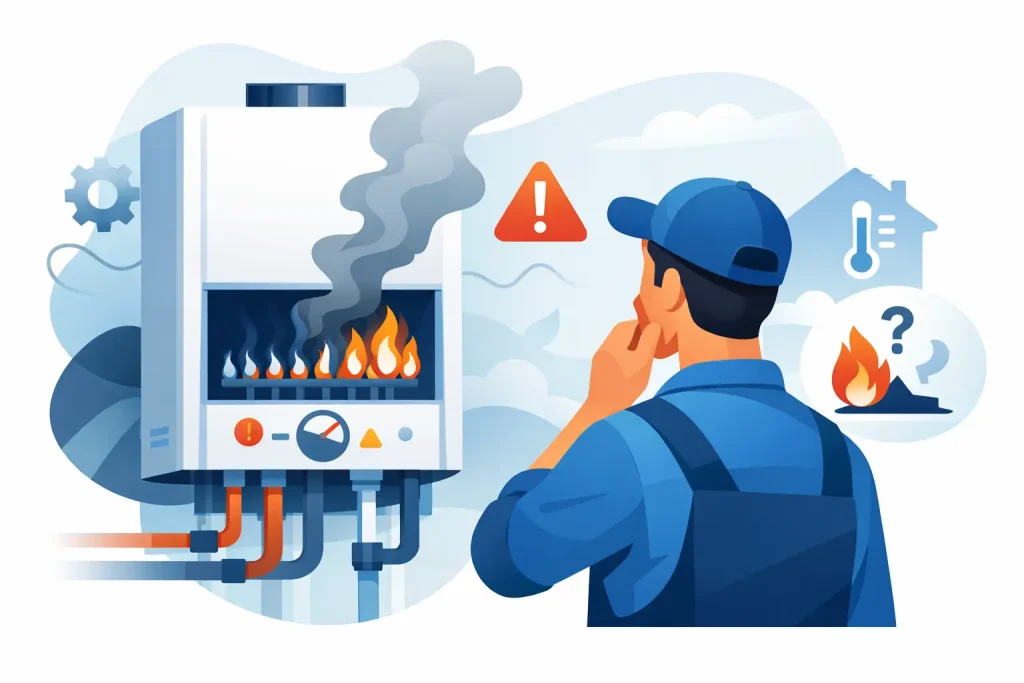
A boiler that fires up, runs briefly and then stops can leave you with lukewarm radiators, unreliable hot water and a fair amount of worry. If your boiler flame keeps cutting out, it is usually the boiler protecting itself after detecting a fault or an unsafe operating condition. It is not a problem to ignore, especially if it happens repeatedly.
Modern gas boilers are designed to shut down rather than continue operating when something is not right. The cause may be relatively straightforward, such as low system pressure, but it can also involve components that require proper testing. For safety, do not remove the boiler casing or try to relight an appliance that will not stay lit. A Gas Safe engineer can diagnose the reason properly and make sure the repair addresses the cause, not just the symptom.
What does it mean when a boiler flame cuts out?
Your boiler needs a stable gas supply, correct water circulation, safe combustion and a reliable electrical signal to keep its burner running. Sensors continually monitor these conditions. If a sensor detects a problem, the boiler may shut off the flame and either try to restart or display a fault code.
This is often called a lockout or ignition failure, depending on the make and model. You may hear the boiler attempt to start, then click off after a few seconds. Alternatively, it may run for several minutes before stopping, particularly when the heating is on.
One isolated shutdown is not always a major concern. A temporary pressure fluctuation or a reset following a power interruption can sometimes explain it. Repeated flame failure, however, needs investigating. Continually resetting the boiler may get heating back for a short time, but it does not fix the underlying fault.
Common reasons a boiler flame keeps cutting out
Low boiler pressure
Low system pressure is one of the most common reasons for a boiler to stop working correctly. Most sealed central heating systems should show around 1 to 1.5 bar when cold, although the correct range can vary by manufacturer.
If the pressure gauge is below the recommended level, the boiler may not run. Homeowners can often repressurise the system using the filling loop, but only if they are confident with the instructions for their particular boiler. If pressure repeatedly drops after being topped up, there could be a leak, a faulty pressure relief valve or an issue with the expansion vessel. That is a repair issue, rather than something to keep topping up.
Poor water circulation
A boiler creates heat, but that heat must be carried safely around the system. If water cannot circulate properly, the boiler can overheat and shut down. Sludge in radiators and pipework, a blocked filter, a stuck valve or a failing pump can all restrict circulation.
Signs can include some radiators staying cold, noisy pipes, a boiler that becomes hot quickly and shuts down, or dark water when radiators are bled. Central heating cleaning and filter maintenance can make a genuine difference where sludge is the problem, but the system should be assessed first. Cleaning is not a cure for every boiler fault.
A condensate pipe that is frozen or blocked
Condensing boilers produce acidic water known as condensate. This should drain away through a condensate pipe. In cold weather, an external pipe can freeze, preventing the condensate from escaping and causing the boiler to shut down.
A frozen condensate pipe is more likely during a cold snap, often with a gurgling sound from the boiler or a fault code on the display. If the external pipe is clearly accessible and frozen, it can usually be thawed carefully with warm water, not boiling water. If you are unsure, or the boiler does not restart afterwards, arrange for an engineer to check it.
Ignition, flame sensor or gas supply faults
The boiler must ignite correctly and confirm that a flame is present. A dirty or failing flame sensor, worn ignition electrodes, a faulty gas valve or an issue with the gas supply can stop this process.
These are not DIY repairs. They require safe testing of combustion, gas pressures and electrical components. A properly maintained boiler service includes checks and cleaning of key internal components where appropriate, helping to identify developing faults before they turn into a no-heating call-out.
A blocked flue or air supply problem
Your boiler needs a clear route to take in air and safely discharge combustion gases. A problem with the flue, terminal or air intake can cause the appliance to stop for safety reasons.
Never cover, block or alter a flue terminal. Check only from a safe distance that there is no obvious obstruction around the outside terminal, such as stored items, leaves or building work. Any concern about the flue must be checked by a Gas Safe registered engineer. This is particularly important if the boiler is in a cupboard, utility room or enclosed kitchen space.
Electrical controls and thermostat issues
Sometimes the boiler is not losing its flame because of a boiler fault at all. A faulty room thermostat, programmer, receiver, wiring connection or smart control can interrupt the call for heat. The boiler then shuts down because it has been told that the home is warm enough, even when it is not.
Look for patterns. Does it cut out only when the heating is running, but hot water works normally? Does the thermostat display look blank or show a low battery warning? Does the problem happen at certain times of day? These details can help an engineer narrow down the fault quickly.
Safe checks you can make before booking a repair
There are a few sensible observations that can be made without touching gas components or taking the casing off. Check whether the boiler display shows a fault code, and make a note of it. Look at the pressure gauge and check whether other gas appliances, such as a gas hob, appear to be working normally.
You can also check that your electricity supply is on, the thermostat is set above the current room temperature and any timer is calling for heating. If your boiler manual permits one reset, you can try it once. Avoid repeatedly resetting it, as this can mask an intermittent fault and potentially place extra strain on components.
Do not attempt repairs involving the gas supply, burner, flue, internal wiring or boiler case. Even a boiler that appears to be working again may need attention if the fault returns.
When to turn the boiler off and seek urgent help
Turn the boiler off if you smell gas, notice soot marks around the appliance, see unusual yellow or lazy flames on other gas appliances, or feel unwell with symptoms such as headaches, dizziness or nausea. Open windows and doors if it is safe to do so, avoid electrical switches and naked flames, and follow the appropriate gas emergency procedure.
Carbon monoxide has no smell or colour, so every home with a gas boiler should have a working audible carbon monoxide alarm. It is an extra layer of protection, not a substitute for annual servicing and correct installation.
For landlords, a flame failure should also be taken seriously as part of the wider duty to keep gas appliances safe. A valid gas safety record is essential, but ongoing maintenance and prompt repair are equally important when a tenant reports unreliable heating or hot water.
Why a thorough diagnosis matters
A quick reset may restore heat, but a reliable repair starts with understanding why the boiler shut down. An engineer should inspect the fault history, test the appliance safely, assess system pressure and circulation, and examine relevant components rather than simply replacing parts on guesswork.
At Boiler-Serv, the focus is on the detail that can be missed during a rushed visit: internal cleaning where required, safety testing, checks of the wider heating system and clear advice on what has been found. That approach is particularly valuable with intermittent faults, where the boiler may appear normal by the time an engineer arrives.
If you can, take a photo of the fault code and note what was running when the flame cut out. Was it hot water, central heating or both? Were radiators heating unevenly? Did the issue start after a cold night or following a pressure top-up? Small details can shorten the diagnosis and help get your home properly warm again.
A boiler should not be something you have to keep resetting and hoping for the best. Arrange a professional inspection when the fault repeats, and you will have a clearer answer, a safer appliance and a better chance of avoiding a complete breakdown when you need heat most.